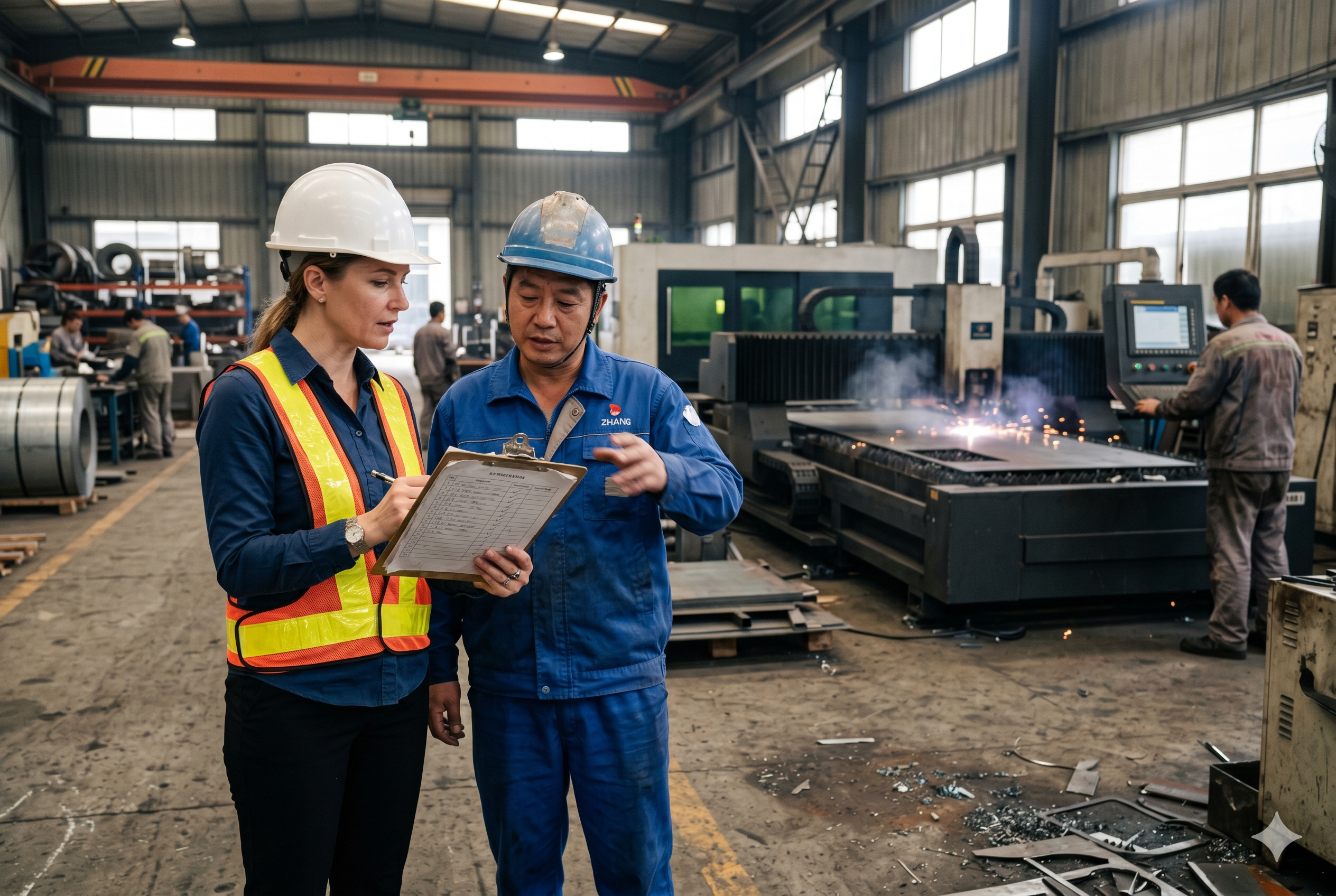
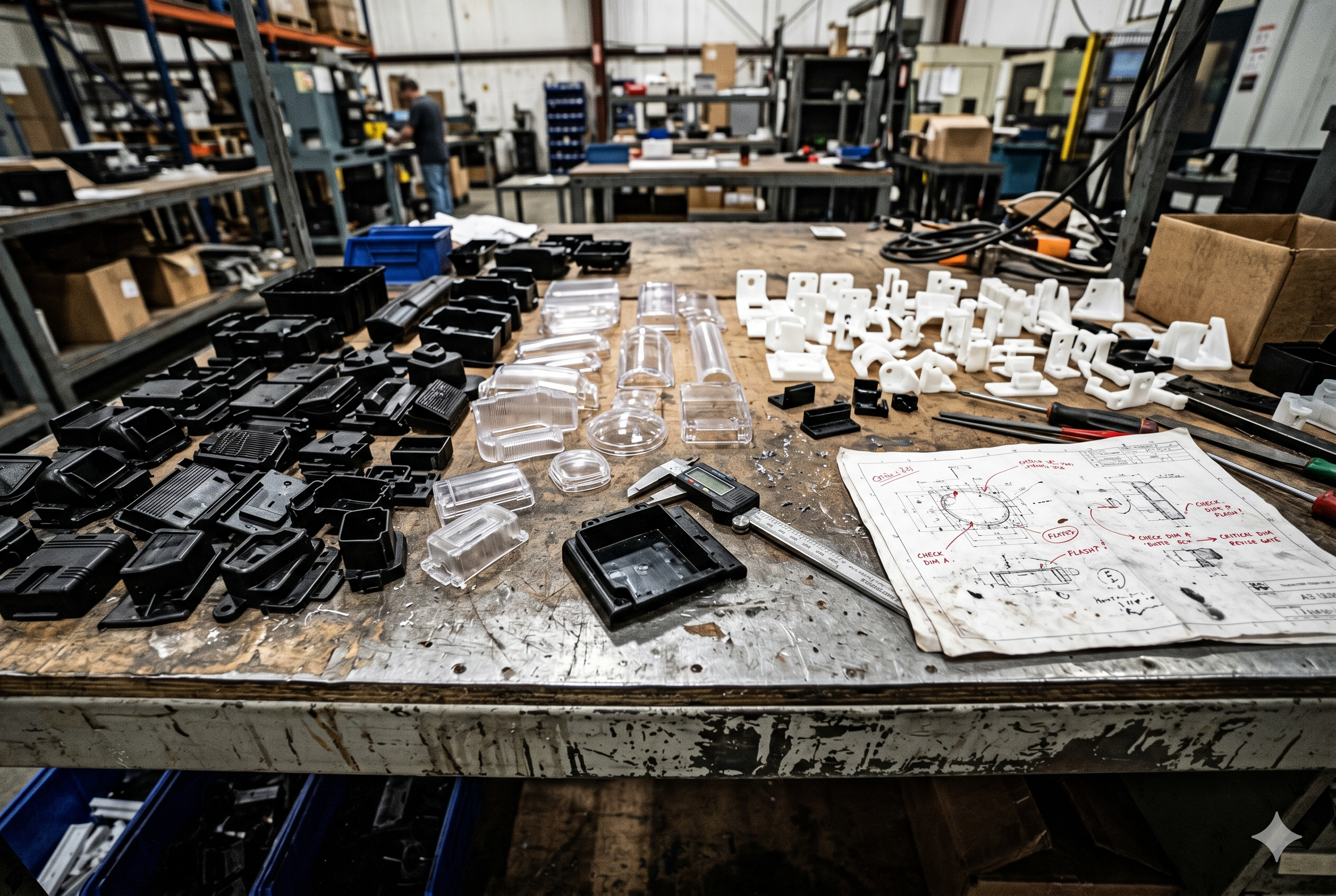
Every month, our team reviews dozens of part drawings from US and Canadian clients. One problem keeps coming up: buyers pick the wrong process before they even contact a factory — and that decision alone drives up costs, delays tooling, and causes quality failures at the border.
The most common injection molding processes used in Chinese factories include standard thermoplastic injection molding, insert molding, overmolding, thin-wall molding, gas-assisted injection molding, co-injection molding, reaction injection molding, and liquid silicone rubber molding. The right process depends on your part geometry, material, volume, and performance requirements.
Each process has a different cost structure, tooling requirement, and quality risk. Knowing the difference before you issue an RFQ will save you time and money.
What Is the Difference Between Thermoplastic and Thermoset Injection Molding for Custom Parts from China?
In our experience handling export orders across hundreds of part families, this is one of the first questions a purchasing manager should answer — because it determines everything from mold design to supplier selection.
Thermoplastic injection molding melts resin pellets and injects them into a mold under high pressure; the part solidifies on cooling and can be remelted. Thermoset injection molding uses reactive resins that cure irreversibly inside the mold. Most Chinese factories specialize in thermoplastics; thermoset and RIM suppliers are a smaller, more specialized group.
Thermoplastic: The Default Process
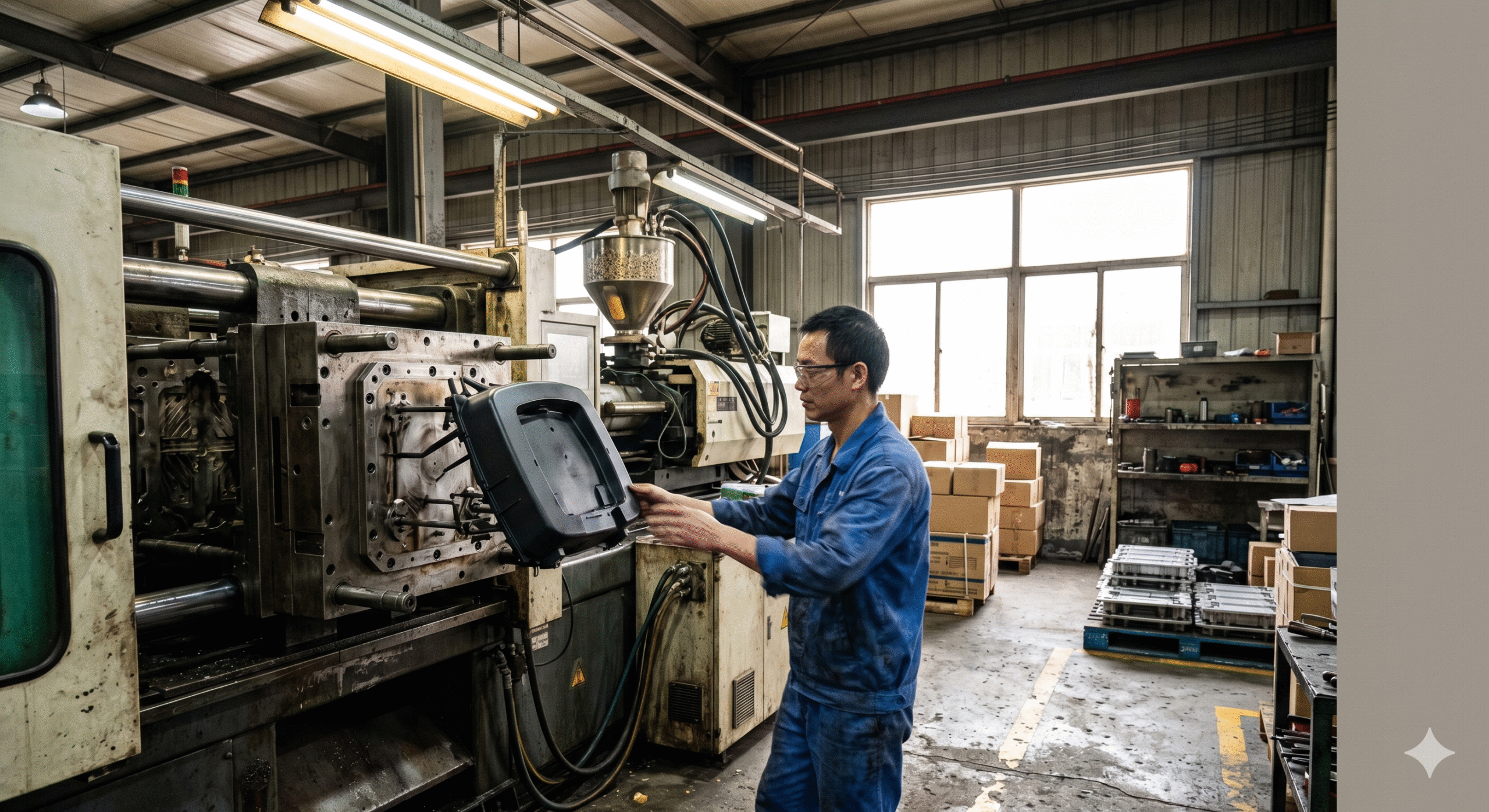
Standard thermoplastic injection molding is the backbone of Chinese manufacturing. It covers the vast majority of consumer, automotive, and electronics parts. The process is straightforward: resin pellets are fed into a heated barrel, melted under pressure, injected into a steel or aluminum mold cavity, cooled, and ejected.
Common thermoplastic materials used in Chinese export manufacturing include:
| Material | Typical Application | Key Property |
|---|---|---|
| ABS | Electronics enclosures, automotive trim | Good surface finish, easy to paint |
| PP | Packaging, medical containers, auto parts | Low cost, chemical resistance |
| PA (Nylon) | Gears, bushings, structural brackets | High strength, wear resistance |
| PC | Optical lenses, safety components | High impact strength, transparency |
| POM (Acetal) | Precision mechanical parts, fasteners | Tight dimensional tolerance |
| TPE/TPU | Flexible seals, grips, over-molded layers | Soft touch, elasticity |
Thermoset and RIM: The Minority Process
Thermoset injection molding — and its close relative, Reaction Injection Molding (RIM) — uses liquid resins that undergo a chemical reaction inside the mold. Once cured, the part cannot be remelted. This makes rework impossible and scrap costly.
Chinese suppliers using RIM most commonly work with polyurethane systems. These are used for large structural panels in automotive and industrial equipment sectors. Tooling costs for RIM are lower than hard injection molds, which makes it attractive for low-volume, large-format parts where a conventional steel mold would be cost-prohibitive.
Why This Matters for Importers
If your drawing specifies a thermoset or RIM part, do not send the RFQ to a general thermoplastic molder. You need a supplier with dedicated RIM equipment and experience handling two-component liquid resin systems. Mixing up your supplier list here leads to either wrong quotes or parts that fail specification.
Hot runner versus cold runner systems also deserve attention here. Hot runner systems eliminate sprue waste and reduce cycle times — important at high volumes. But they require maintenance expertise. Cold runner systems are simpler, with lower tooling costs. Importers should ask suppliers which system they use and confirm they have in-house hot runner maintenance capability before signing a tooling agreement.
| System | Pros | Cons | Best For |
|---|---|---|---|
| Hot Runner | No sprue waste, fast cycles, better cosmetics | Higher tooling cost, needs skilled maintenance | High-volume thermoplastic parts |
| Cold Runner | Lower tool cost, simpler | Material waste per cycle, slower | Low-volume or simple geometries |
When Should I Choose Gas-Assisted Injection Molding Over Standard Injection Molding for My Parts?
Our engineers have found that this question comes up most often when a client has a part with thick cross-sections, visible sink marks on the drawing review, or a weight reduction target that standard molding cannot meet.
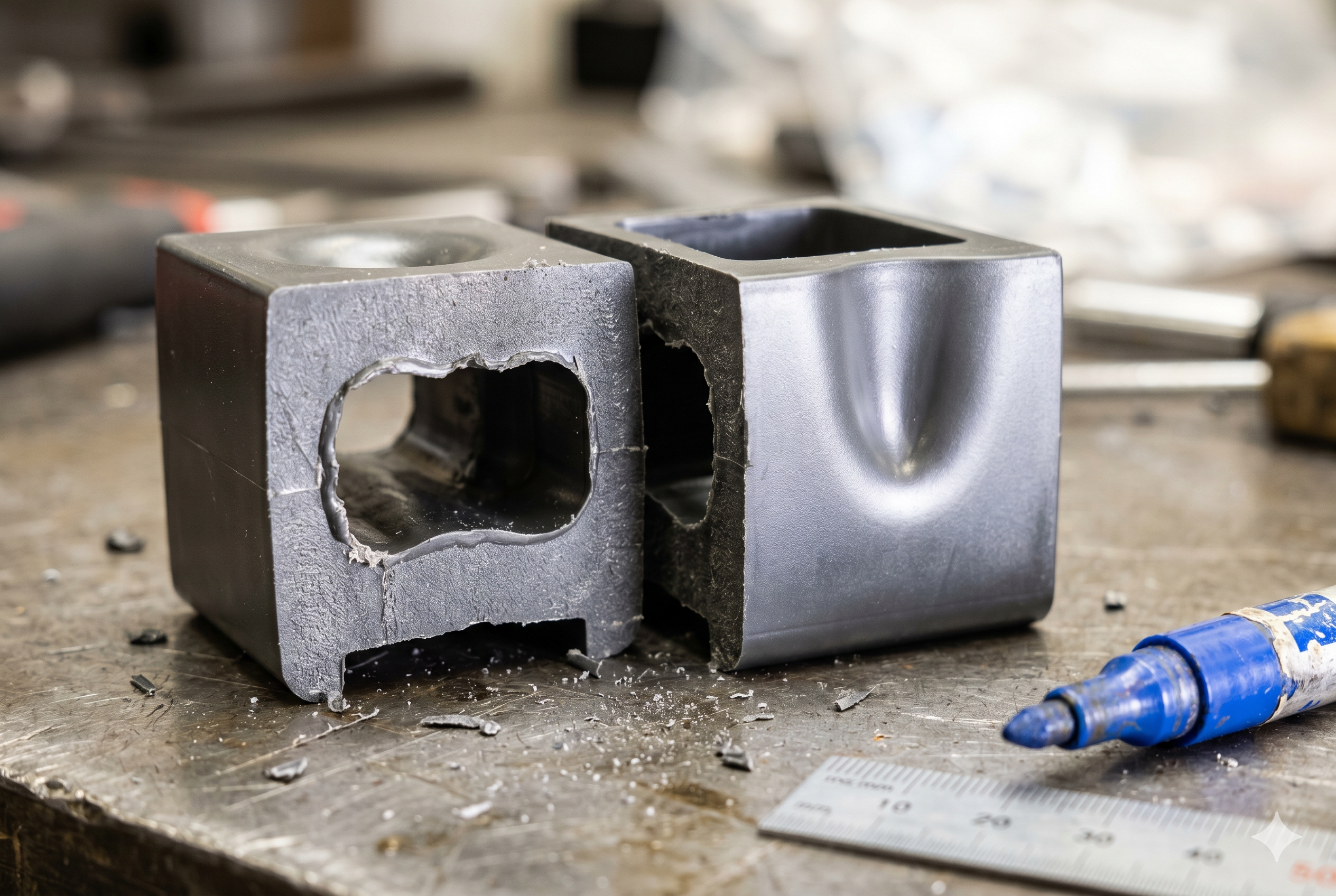
Gas-assisted injection molding is the right choice when your part has thick walls, long flow paths, or large flat surfaces prone to sink marks and warpage. It injects pressurized nitrogen into the melt to hollow out thick sections, reducing sink marks, weight, and cycle time compared to standard solid injection molding.
How Gas-Assisted Molding Works
After partial injection of the thermoplastic melt, pressurized nitrogen gas is introduced through the gate or a dedicated gas pin. The gas pushes the melt outward against the mold wall, forming a hollow channel inside the part. The gas is vented before the mold opens, and the part is ejected.
This process is well established in Chinese factories serving the automotive and furniture sectors. Common applications include:
- Automotive door handles and grab bars
- Furniture frames and structural tubes
- Large appliance housings
- Sporting goods handles
Gas-Assisted vs. Standard: When to Choose
| Criteria | Standard Injection Molding | Gas-Assisted Injection Molding |
|---|---|---|
| Wall thickness | Uniform, typically 1.5–4 mm | Thick sections >4 mm, variable walls |
| Sink mark risk | Higher on thick sections | Significantly reduced |
| Part weight | Full solid material | 10–40% lighter |
| Tooling cost | Lower | Higher (gas injection system) |
| Cycle time | Standard | Shorter on thick-walled parts |
| Best for | Simple geometry, uniform walls | Complex geometry, long flow paths |
What Chinese Factories Can Deliver
Not every injection molder in China operates gas-assist equipment. It requires a dedicated nitrogen generator, gas control unit, and tooling designed with gas channels. When qualifying a Chinese supplier for gas-assisted parts, confirm they have:
- In-house nitrogen gas injection equipment (not outsourced)
- Experience with the specific resin you're using — gas behavior changes with viscosity
- Process documentation showing gas pressure profiles from previous jobs
Without these three, you risk getting a standard mold quote with a promise to "try gas assist later" — which rarely works well in practice.
Sink Marks: The Importer's Quality Risk
Sink marks are a common rejection cause in pre-shipment inspection. If your part drawing has thick bosses, ribs, or transitions, and you're using standard molding, your supplier needs a strategy for managing this. Gas-assisted molding removes the root cause. Alternatively, redesigning the rib geometry can help — but that requires tooling changes. Address this before mold fabrication, not after T1 sampling.
Can Chinese Injection Molding Factories Handle Overmolding and Insert Molding for Complex Custom Parts?
When we source overmolded parts for US clients, one of the first things we audit is whether the factory has two-shot molding equipment or relies only on manual insert placement. The answer changes both your price and your quality risk.
Yes, Chinese injection molding factories can handle both overmolding and insert molding. Insert molding embeds metal or non-plastic components into the part during a single mold cycle. Overmolding bonds a second material layer over a rigid substrate using a two-shot or sequential process. Both are widely available in export-grade Chinese facilities, but capability levels vary significantly.
Insert Molding: Eliminating Secondary Assembly
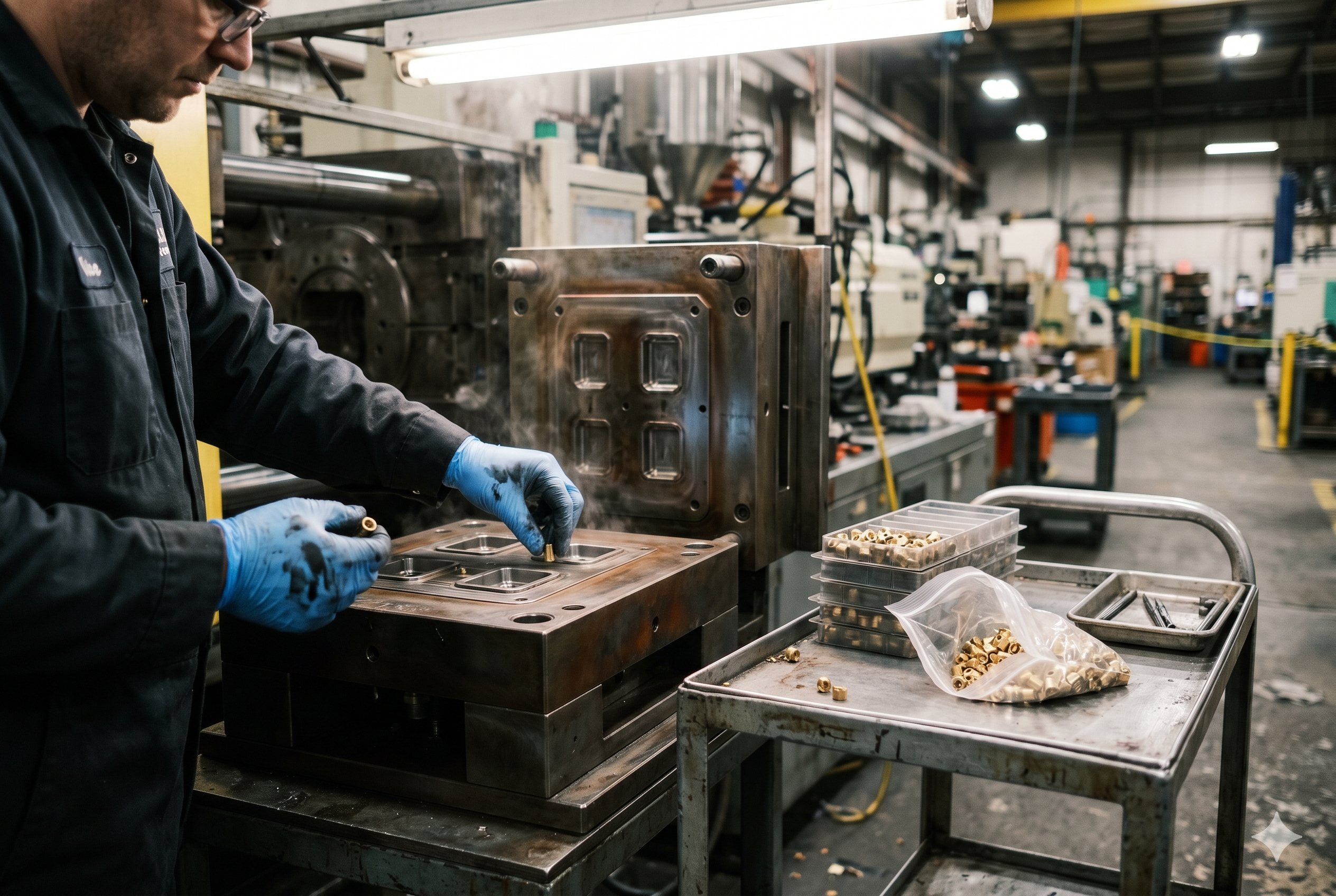
Insert molding places a pre-formed component — a metal threaded insert, pin, contact, or bushing — into the mold before injection. The resin flows around it and bonds mechanically on cooling. The result is a single integrated part with no secondary assembly step.
This reduces unit cost at scale and improves pull-out strength compared to post-molded press-in inserts. Common insert types used in Chinese export manufacturing:
- Brass threaded inserts (most common)
- Stainless steel pins and shafts
- Electrical contacts and terminals
- Filter mesh or fabric substrates
Inserts must be loaded into the mold manually or by robot. For high-volume orders, confirm whether the factory uses robotic insert loading — it is faster and more consistent than manual placement.
Overmolding: Two Materials, One Part
Overmolding bonds a second polymer layer over a rigid substrate. The most common application is a soft TPE grip over a hard PP or ABS body. This is used in tool handles, personal care products, consumer electronics enclosures, and medical device grips.
Two-shot (2K) molding does this in a single machine with a rotating mold — faster and more consistent. Sequential overmolding runs two separate mold cycles, transferring the substrate to a second mold — lower tooling cost but higher handling risk.
| Method | Tooling Cost | Cycle Time | Bonding Quality | Best For |
|---|---|---|---|---|
| Two-shot (2K) | Higher | Faster | Excellent — no contamination risk | High-volume, cosmetic-critical |
| Sequential overmolding | Lower | Slower | Good — depends on handling | Medium-volume, complex shapes |
| Manual transfer | Lowest | Slowest | Variable | Prototypes, very low volume |
Material Compatibility
Not all material pairs bond well. A factory that suggests "any soft material over any hard substrate" is a red flag. The substrate and overmold resin must have chemical compatibility or a mechanical interlock design must be engineered into the part geometry.
Common compatible pairs:
- TPE over PP or ABS
- TPU over PC
- Silicone over PA (with primer)
Always ask the factory to provide bond peel test data from previous jobs with the same material combination before approving tooling.
Auditing the Factory Capability
When our team audits a Chinese factory for overmolding projects, we check for:
- Dedicated 2K injection machines (if two-shot is specified)
- Climate-controlled insert storage area (to prevent oxidation on metal inserts)
- Documented process controls for insert placement torque and position tolerance
- Pre-production material compatibility testing records
A supplier without these controls will not consistently produce bonded parts that pass dimensional and mechanical inspection.
How Do I Decide Which Injection Molding Process Is Right for My Specific Part Design?
Our sourcing team asks a structured set of questions every time a new part drawing comes in. The answers point directly to the right process — and the right supplier category to target.
To choose the correct injection molding process, evaluate your part's wall thickness, material requirements, geometry complexity, functional requirements, and target volume. Standard thermoplastic molding covers most parts. Specific geometry, material, or performance needs direct you toward specialized processes such as gas-assist, overmolding, insert molding, LSR, or RIM.
A Decision Framework for Purchasing Managers
Start with these questions in order:
Step 1: What is your material?
- Standard engineering resin (ABS, PP, PA, PC, POM) → thermoplastic molding
- Liquid silicone → LSR injection molding
- Polyurethane structural foam → RIM
Step 2: Is there a second material or embedded component?
- Metal insert required → insert molding
- Soft grip or second polymer layer → overmolding
Step 3: What is the wall thickness?
- Uniform walls under 1 mm → thin-wall injection molding (specialized high-speed machines)
- Thick sections over 4 mm with sink mark or weight concerns → gas-assisted injection molding
- Two different materials, structural foam core → co-injection (sandwich) molding
Step 4: What is your volume and part size?
- High volume → evaluate hot runner tooling
- Large format, low volume, thermoset → RIM
LSR: A Special Case
Liquid silicone rubber injection molding is the inverse of thermoplastic setups. The mold is heated; the injection equipment is cooled. Chinese manufacturers use LSR for medical-grade seals, infant products, and wearable device components that need biocompatibility and extreme-temperature performance. This process requires FDA-compliant raw materials and a dedicated clean production environment for medical-grade parts.
Thin-Wall Injection Molding
Wall thicknesses below 1 mm require high-speed, high-pressure machines with fast injection rates and tight process control. This is the dominant process for packaging, disposable medical containers, and lightweight electronic housings. Not every Chinese factory has the equipment for consistent thin-wall production — confirm machine injection speed specifications before awarding tooling.
Co-Injection (Sandwich) Molding
Co-injection simultaneously or sequentially injects two different materials through a single gate. The result is a skin-core structure. The outer skin presents a clean cosmetic surface; the core can be recycled material, structural foam, or a different resin entirely. Chinese factories use this to reduce material cost at high volumes while maintaining surface appearance standards.
Tooling Quality: Specify Export-Grade
Regardless of which process you choose, specify export-grade tooling in your purchase agreement. Export-grade molds from China are built to tighter tolerances — typically 0.005–0.01 mm precision — and undergo more rigorous trial runs than domestically-used molds. A standard acceptance protocol includes a 4-hour continuous operation test before mold sign-off. Do not assume this is the default. Write it into the contract.
Process Selection Summary
| Part Requirement | Recommended Process |
|---|---|
| Standard solid thermoplastic part | Standard injection molding |
| Thick walls, sink mark or weight issue | Gas-assisted injection molding |
| Embedded metal insert | Insert molding |
| Soft-over-hard two-material part | Overmolding (2-shot or sequential) |
| Wall thickness under 1 mm | Thin-wall injection molding |
| Skin-core two-material structure | Co-injection (sandwich) molding |
| Large structural panel, low volume | Reaction injection molding (RIM) |
| Medical or high-temp flexible part | LSR injection molding |
Conclusion
Choosing the right injection molding process before you issue your RFQ saves tooling cost, reduces sampling cycles, and prevents quality failures at inspection. Match your part geometry and material to the correct process — then find a supplier with verified capability in that specific area.