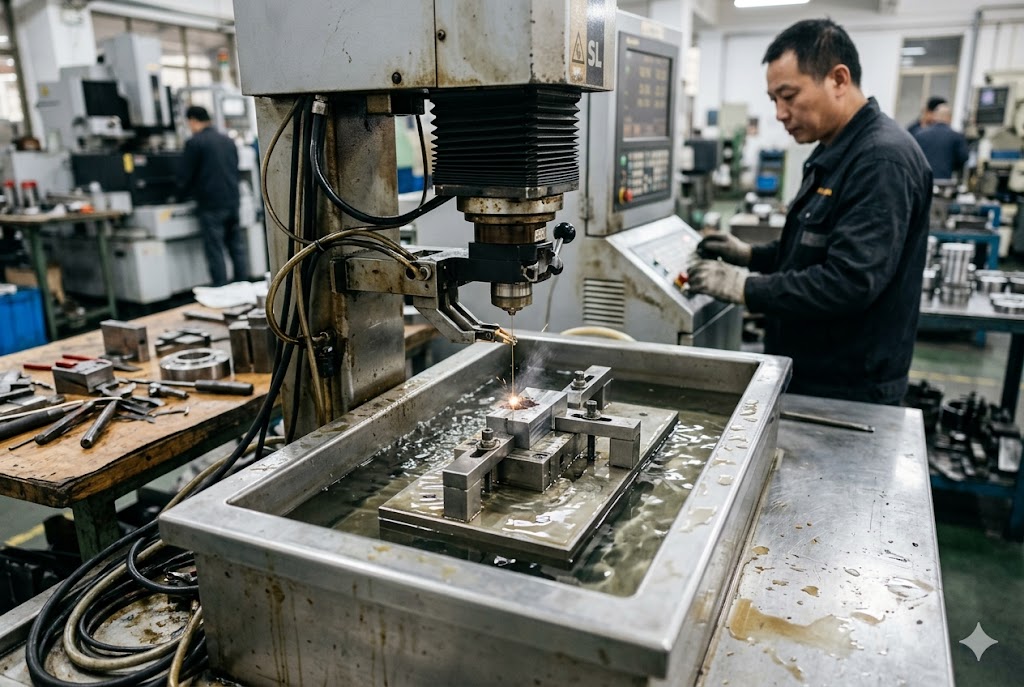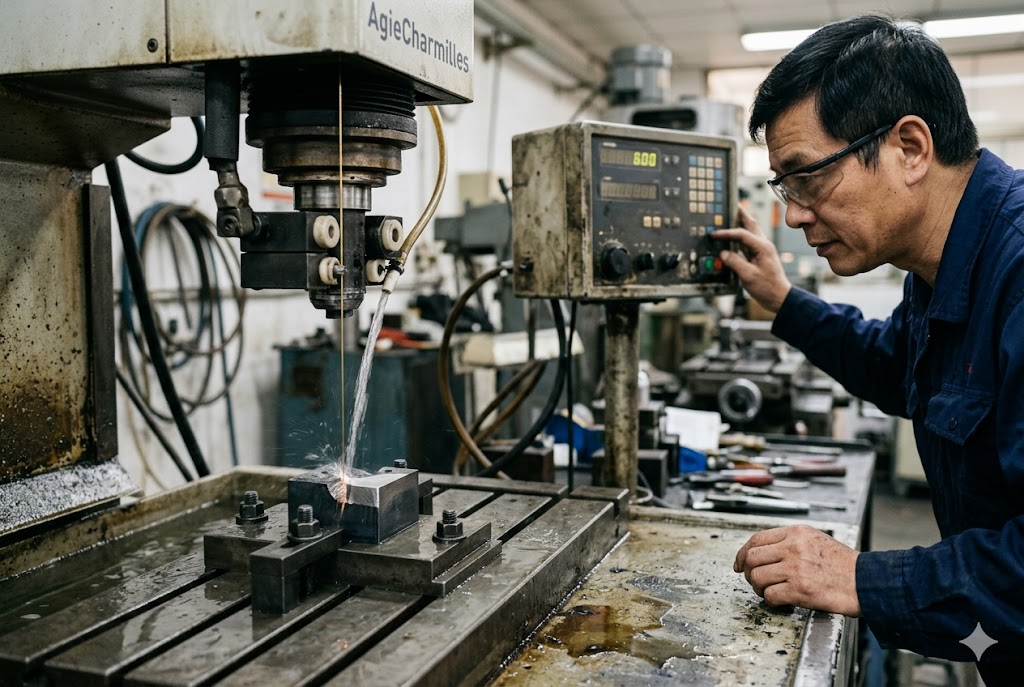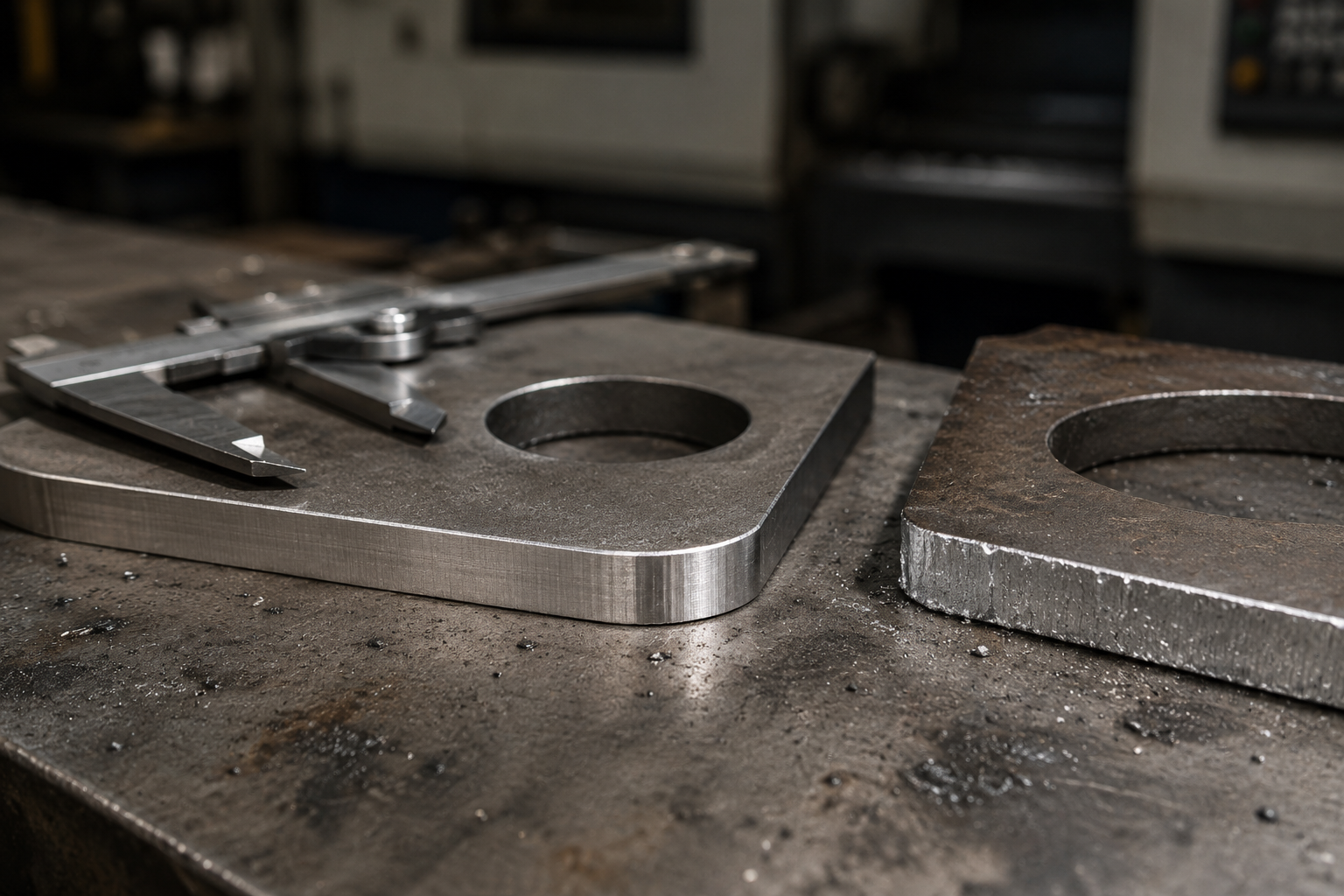
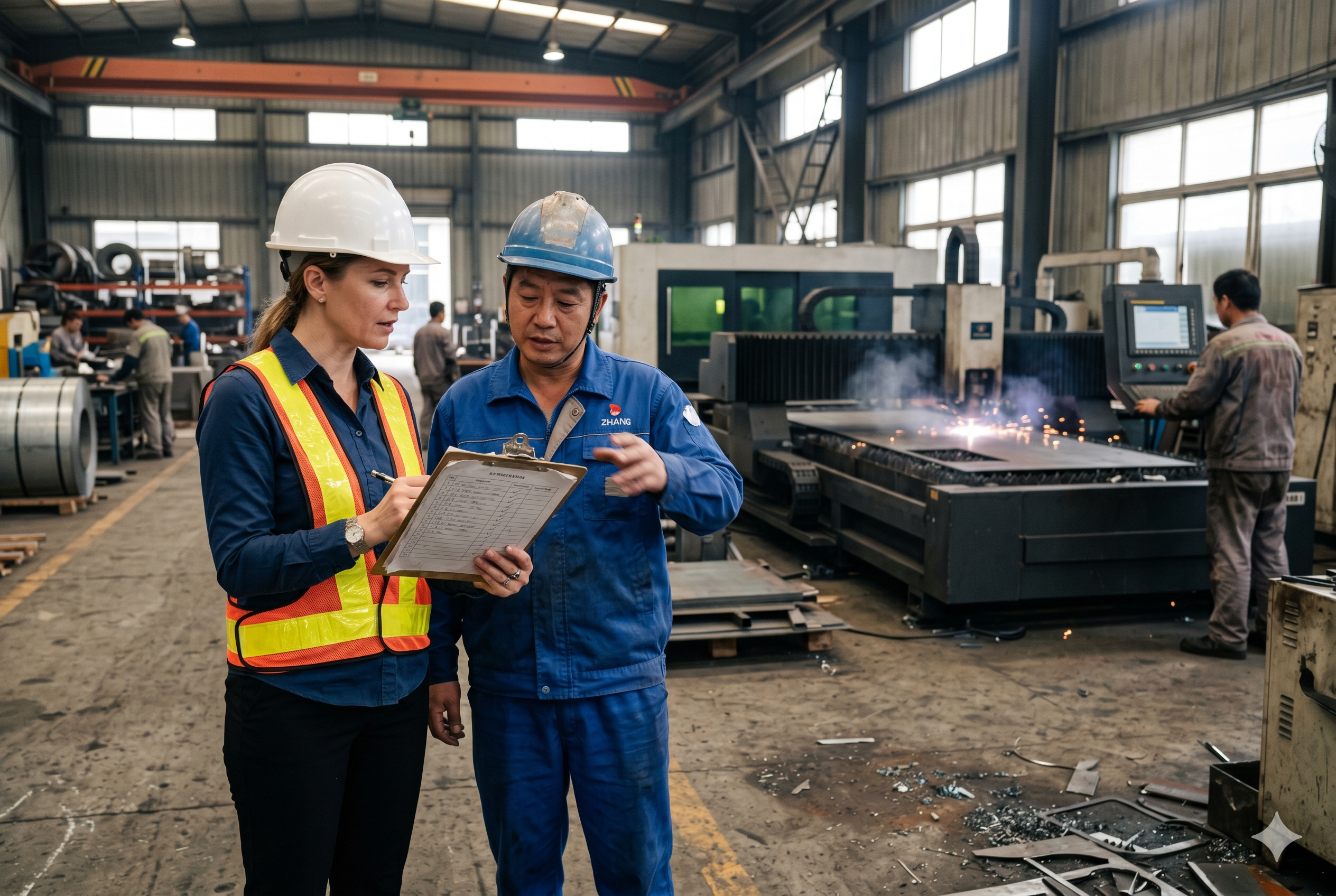
We have visited hundreds of factories across China. One thing surprises new buyers every time: the supplier with the most polished website is sometimes the one with no machines at all.
You can tell if a sheet metal factory in China is a real manufacturer by checking their Business License for manufacturing verbs, verifying their factory address on satellite maps, requesting a 13% VAT invoice, and asking technical questions that only a production team can answer accurately and without delay.
Once you know what to look for, the process is straightforward. This guide walks you through four key areas so you can verify suppliers before you place a single order.
What Documents Should I Ask for Before I Trust a Sheet Metal Supplier in China?
When we onboard a new supplier for a client, the first thing we do is request a document package. The documents a supplier provides—or refuses to provide—tell you almost everything you need to know.
Before trusting a sheet metal supplier in China, ask for their Business License, Unified Social Credit Code certificate, and a sample VAT invoice. A legitimate manufacturer will share these immediately. Hesitation or excuses are a warning sign you should not ignore.
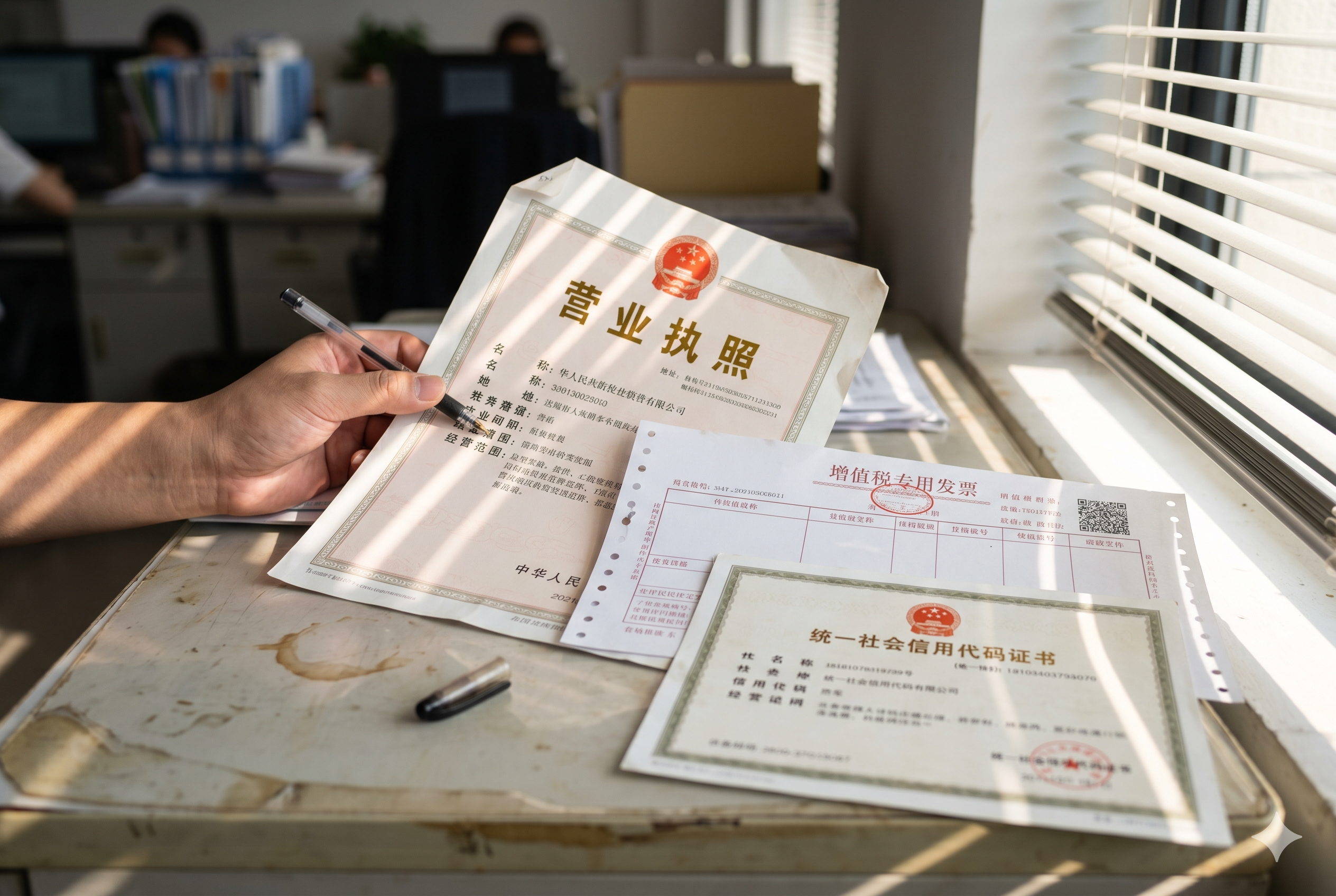
The Business License (营业执照)
This is the most important document to request. Look at the field labeled "Business Scope" (经营范围). A real manufacturer will have words like 生产 (Production), 制造 (Manufacture), or 加工 (Processing) in this section. A trading company is legally restricted to 销售 (Sales) or 贸易 (Trade). If you see only sales-related verbs, you are looking at a middleman.
Here is a quick reference:
| Term in Chinese | Pinyin | Meaning | Found In |
|---|---|---|---|
| 生产 | Shēngchǎn | Production | Manufacturer |
| 制造 | Zhìzào | Manufacture | Manufacturer |
| 加工 | Jiāgōng | Processing | Manufacturer |
| 销售 | Xiāoshòu | Sales | Trader |
| 贸易 | Màoyì | Trade | Trader |
The Unified Social Credit Code (USCC)
Every registered business in China has an 18-digit Unified Social Credit Code 1. The third through eighth digits are an administrative division code. These digits must match the geographic location of the physical factory. If the code says the company is registered in Guangzhou, but the factory claims to be in Shenzhen, something is wrong. You can cross-check this on platforms like Qichacha (企查查) or Tianyancha (天眼查).
The VAT Invoice (增值税发票)
Ask the supplier to confirm they can issue a 13% Value-Added Tax invoice 2 under their own company name. In China, only manufacturers are eligible to claim export tax drawbacks from the government, and issuing this specific type of invoice is a legal requirement for that process. A trading company typically issues a different, lower-rate invoice. If a supplier cannot—or will not—provide a 13% VAT fapiao, they are most likely not the factory.
Social Insurance Records
On Qichacha or Tianyancha, you can check how many employees a company pays social insurance 3 for. A factory with 200 workers should have social insurance records reflecting that. A supplier claiming to be a large manufacturer but with only 10 insured employees is almost certainly not producing in-house.
How Can I Verify If the Factory Actually Owns Its Production Equipment?
Owning a building is not the same as owning a factory. We have walked into facilities where the machines belong to a third-party subcontractor renting space on-site. The supplier's name is on the door, but none of the equipment belongs to them.
To verify that a sheet metal factory owns its equipment, request a live video tour of the production floor during working hours, ask for machine serial numbers and purchase records, and cross-reference the factory's daily output claims against the physical capacity of the machines you can see.
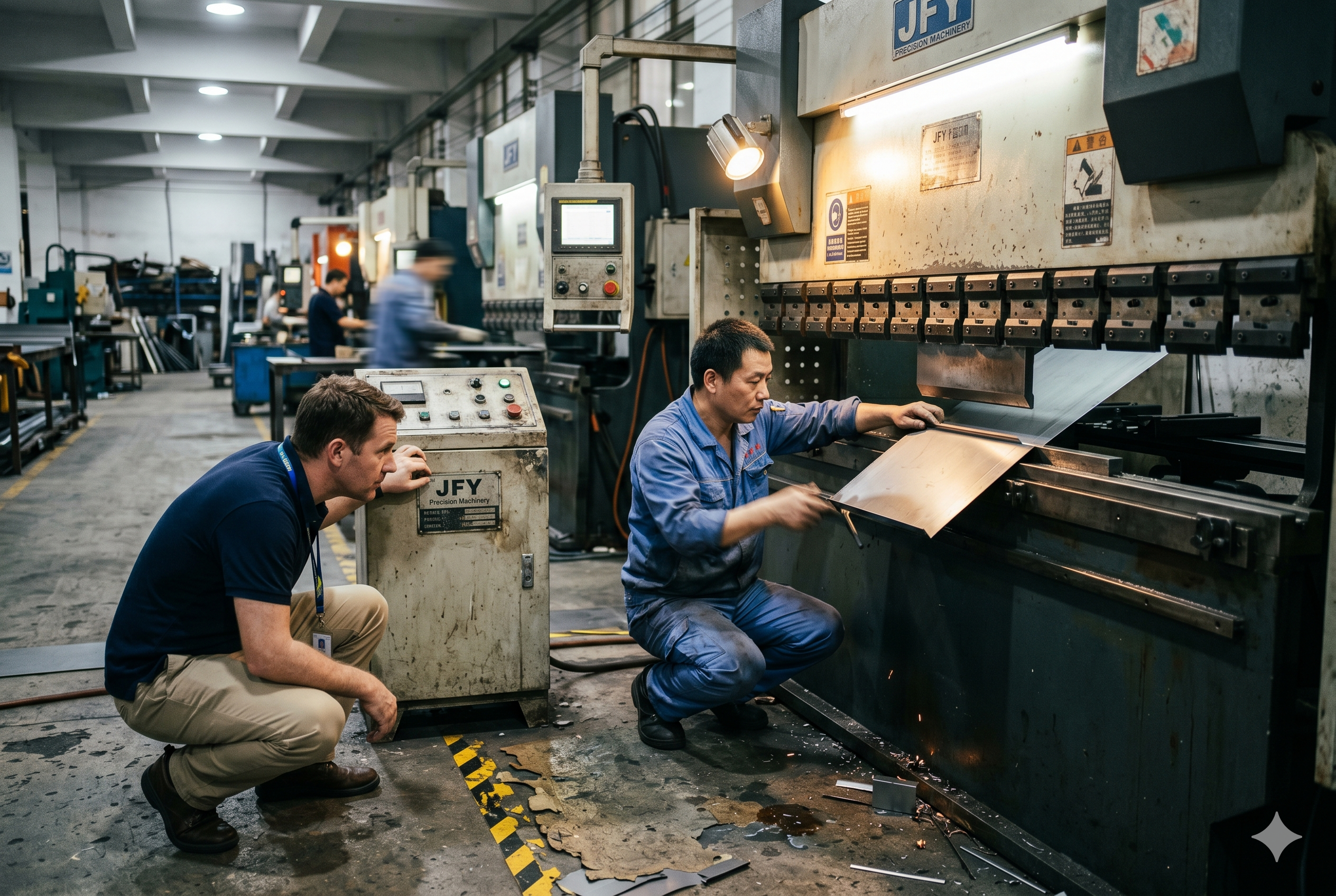
Request a Live Video Walkthrough
Do not accept pre-recorded videos or a tour of only the showroom and office. Ask for a live video call during their production hours (typically 8 AM–6 PM China Standard Time). Request that the person holding the camera walk down each production line, show you the raw material storage area, and pan slowly across the machines. Watch for these details:
- Are workers actively using the machines, or is the floor quiet?
- Are there stacks of raw sheet metal stock with visible heat numbers or coil tags?
- Are workers wearing uniforms with the company name or logo?
A trading company operating from an office cannot fake a working production floor in real time.
Ask for Machine Specifications and Purchase Documentation
Any factory that owns its equipment can tell you the brand, model, and tonnage of each press brake 4, laser cutter, or punch machine on the floor. Ask specific questions like: "What is the maximum bed length of your largest press brake?" or "What brand and wattage is your fiber laser cutter?" A manufacturer will answer immediately. A trader will say they need to "check with the production team."
Here is a table of common sheet metal equipment and what to ask:
| Equipment | What to Ask | Why It Matters |
|---|---|---|
| Fiber Laser Cutter 5 | Brand, wattage, maximum sheet size | Determines cutting capability and material thickness range |
| Press Brake | Tonnage, bed length, CNC or manual | Determines bending accuracy and part complexity |
| Punch Press | Tonnage, tooling library size | Determines hole patterns and feature complexity |
| Welding Stations | Number of stations, process (MIG/TIG/Spot) | Determines assembly and joining capability |
| Surface Treatment | In-house or outsourced? | Determines lead time control for finishing |
Cross-Check Output Claims Against Machine Capacity
If a supplier claims to produce 50,000 parts per month, that number must align with the machines they say they own. A single 6kW fiber laser cutter running two shifts can cut approximately 600–900 parts per day depending on complexity. If their claimed volume far exceeds what their stated equipment can physically produce, they are likely outsourcing production to another factory.
What Red Flags Should I Watch for When I Audit a China Sheet Metal Supplier?
Factory audits are the single best tool we use to protect our clients. But only if you know what you are looking for. Many red flags are subtle, and a well-rehearsed trading company can paper over the obvious ones.
The main red flags during a China sheet metal supplier audit include a mismatch between the registered address and the physical factory location, an inability to produce batch-specific Mill Test Certificates, vague answers to technical process questions, and production floors that show no signs of active work.
Address Mismatch
Before visiting, look up the supplier's registered address on their Business License. Then search that address on Baidu Maps or Google Maps satellite view. A real factory sits in an industrial zone or manufacturing cluster. If the address corresponds to a commercial office building, a residential tower, or a virtual office park, you are not dealing with a factory.
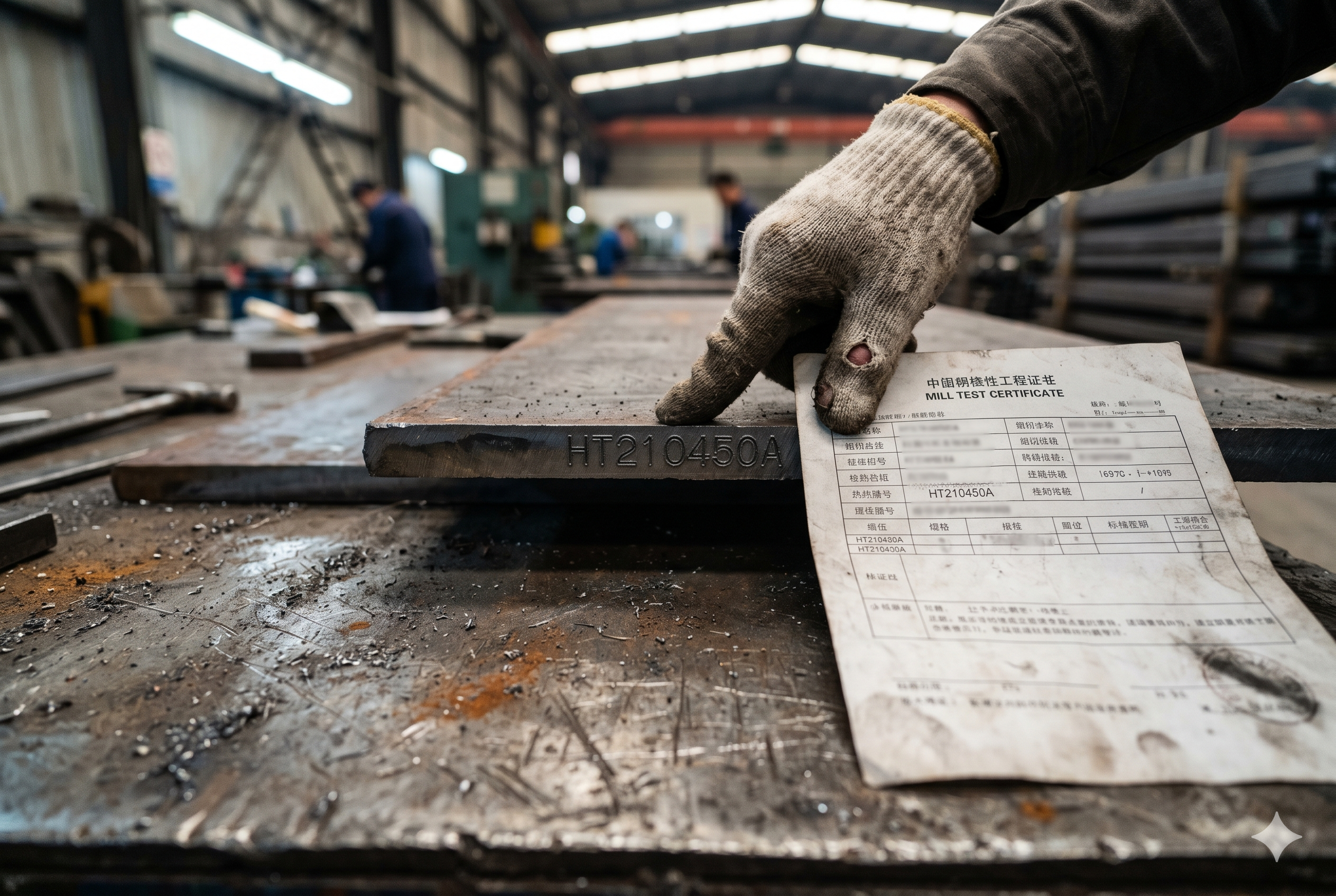
No Batch-Specific Mill Test Certificate (MTC)
A Mill Test Certificate 6 is a document issued by the raw material mill that certifies the chemical composition and mechanical properties of a specific batch of steel. Every legitimate sheet metal factory should be able to provide an MTC for the material they use in your order. More importantly, the Heat Number printed on the MTC must match the identification code physically stamped or tagged on the sheet metal coil or plate in the warehouse.
If a supplier hands you a generic MTC with no Heat Number, or cannot show you where that number appears on the physical stock, you cannot trust their material traceability.
Vague Technical Responses
Ask the factory's sales contact specific process questions. Examples include:
- "What is your typical dimensional tolerance for laser-cut parts at 3mm thickness?"
- "What post-weld treatment do you use to prevent distortion on thin gauge panels?"
- "What is your standard lead time per 100 units for a part requiring three bends and one welded joint?"
A factory's sales team works alongside engineers and production managers every day. They know these numbers. A trading company's sales team will say: "Let me check with our factory and come back to you." That delay is a red flag.
Mismatched Product Catalog
Look at everything the supplier sells online. A genuine sheet metal manufacturer focuses on a specific set of metal fabrication 7 processes. If the catalog includes electronics, textiles, plastic housings, garden furniture, and sheet metal parts all in one place, you are almost certainly looking at a trading company aggregating products from many unrelated factories.
Why Do Some China Suppliers Look Like Factories Online but Act Like Middlemen?
This is the question we hear most often from purchasing managers who have been burned before. The answer is structural, and understanding it makes you a better buyer.
Some China suppliers appear to be factories online because they use real factory photos, technical language, and even factory addresses in their marketing, while actually operating as trading intermediaries who outsource all production to third-party manufacturers and add a margin for coordination.

The Factory-with-a-Trading-Arm Model
Not all trading companies are dishonest. Many legitimate Chinese manufacturers operate a separate trading entity to handle international sales. In this model, the factory produces the goods, and the trading company manages the export paperwork, customer communication, and currency exchange 8. You can identify this legitimate structure by checking whether the two companies share the same Legal Representative or shareholders on Qichacha or Tianyancha. If they do, you have a factory with a trading arm, which is acceptable and common.
The problem arises when a purely external trading company presents itself as the manufacturer with no ownership connection to any factory at all.
Why the Deception Works Online
Platforms like Alibaba 9 and Made-in-China allow suppliers to self-report their company type. Many trading companies select "Manufacturer" when registering. They then populate their profiles with:
- Stock photos of factory floors purchased from image libraries
- Technical specifications copied from the actual manufacturer's materials
- Certifications issued to a cooperating factory, not their own entity
- Response templates written by engineers they do not employ
Without verification, these profiles are indistinguishable from a real factory.
The Corporate Intelligence Approach
Use Qichacha or Tianyancha to run a background check on any supplier before engaging. Look for:
| Check | What to Look For | Warning Sign |
|---|---|---|
| Business Scope | Manufacturing verbs (生产, 制造, 加工) | Only sales or trade verbs |
| Registered Capital | Reflects scale of claimed operations | Very low capital for claimed factory size |
| Social Insurance Count | Matches claimed workforce size | Fewer than 20 insured for a "500-person factory" |
| Shareholder Links | Shared directors with a known factory | No links to any production entity |
| Registration Date | Company age matches experience claims | Registered 6 months ago, claims 20 years of experience |
Why We Visit Every New Supplier in Person
Our team in China visits every new supplier before they receive a client order. We confirm the address, walk the floor, photograph the equipment, and ask the production manager 10 questions directly. This step is non-negotiable. It is also the step that most buyers skip because it costs time and money. That decision is usually where problems start.
Conclusion
Verifying a Chinese sheet metal supplier takes effort, but the tools exist and the process is learnable. Check documents, visit in person, ask technical questions, and trust the data over the presentation.
Footnotes
1. Overview of China's 18-digit business identifier system and its structure. ↩︎
2. Explains how China's VAT system applies to manufacturers and export rebates. ↩︎
3. Overview of social insurance systems and employee coverage requirements. ↩︎
4. Technical overview of press brake machinery, tonnage, and bending operations. ↩︎
5. How fiber laser technology works and its industrial cutting applications. ↩︎
6. What a Mill Test Certificate contains and why material traceability matters. ↩︎
7. Overview of metal fabrication processes including cutting, bending, and welding. ↩︎
8. How foreign exchange markets affect cross-border trade transactions. ↩︎
9. Background on Alibaba's B2B marketplace model and supplier self-reporting. ↩︎
10. Role of production management in manufacturing operations and oversight. ↩︎