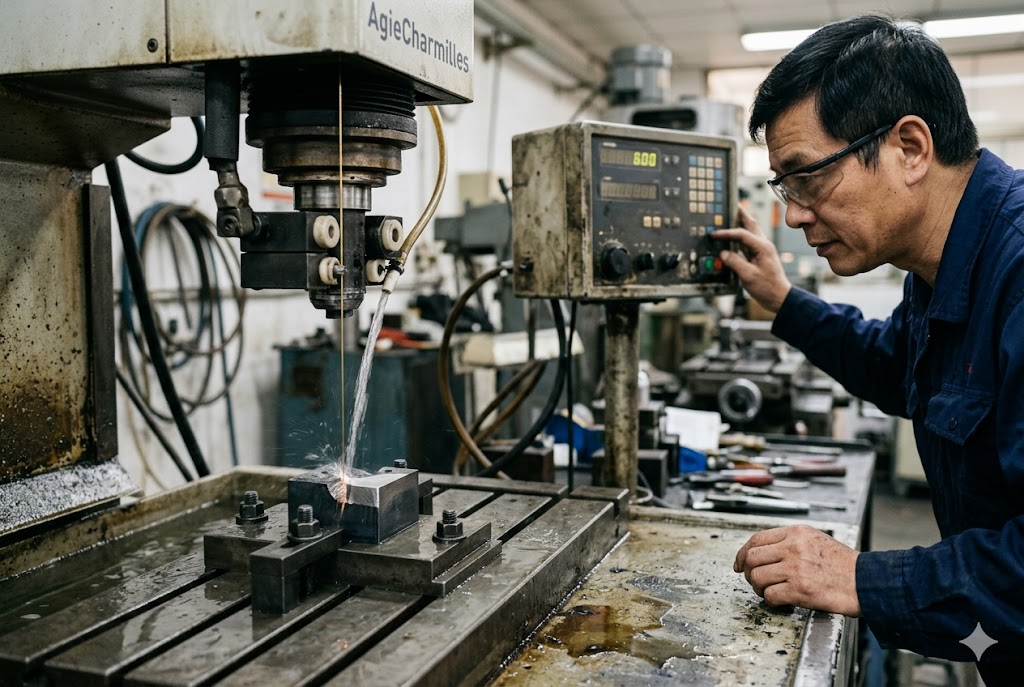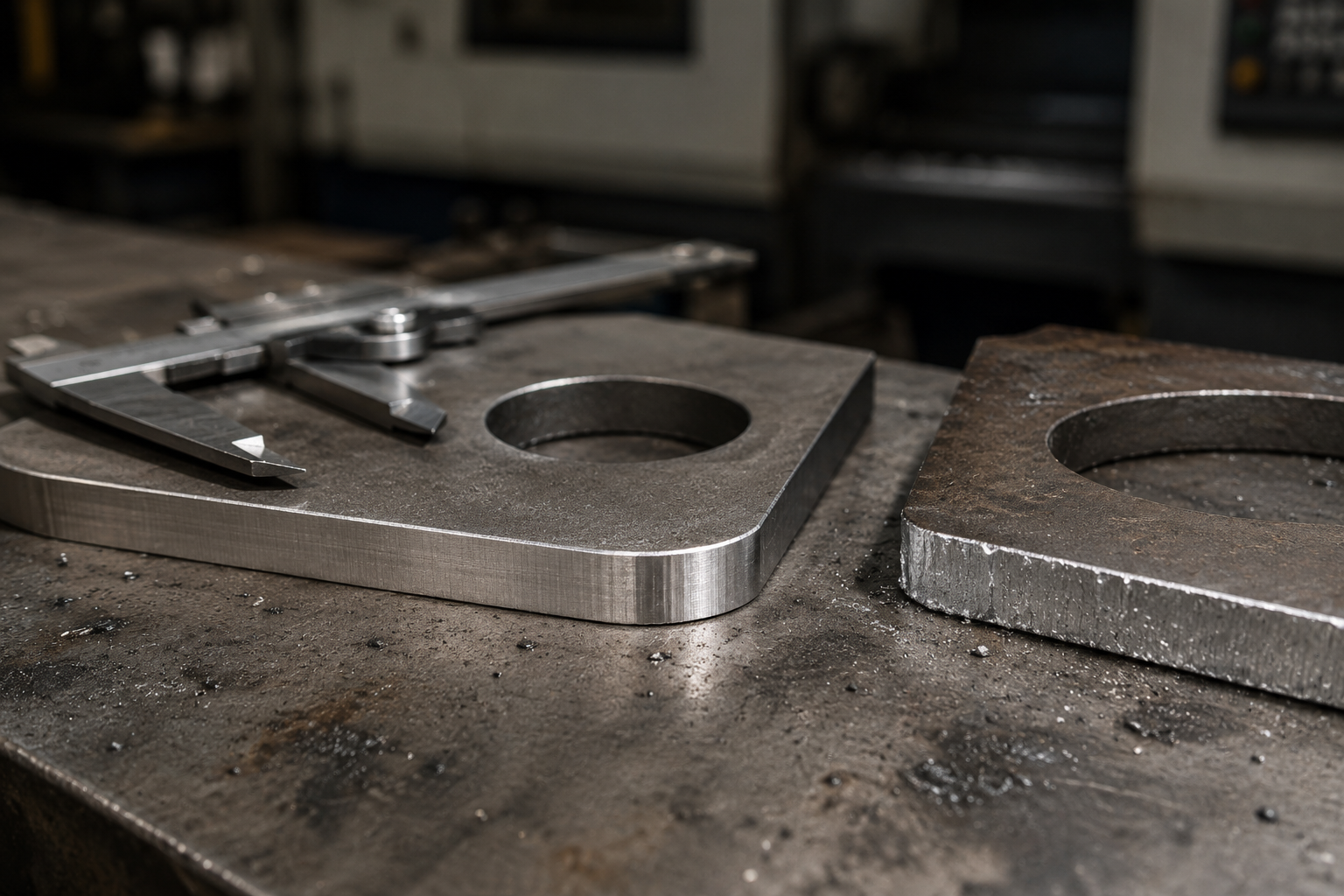
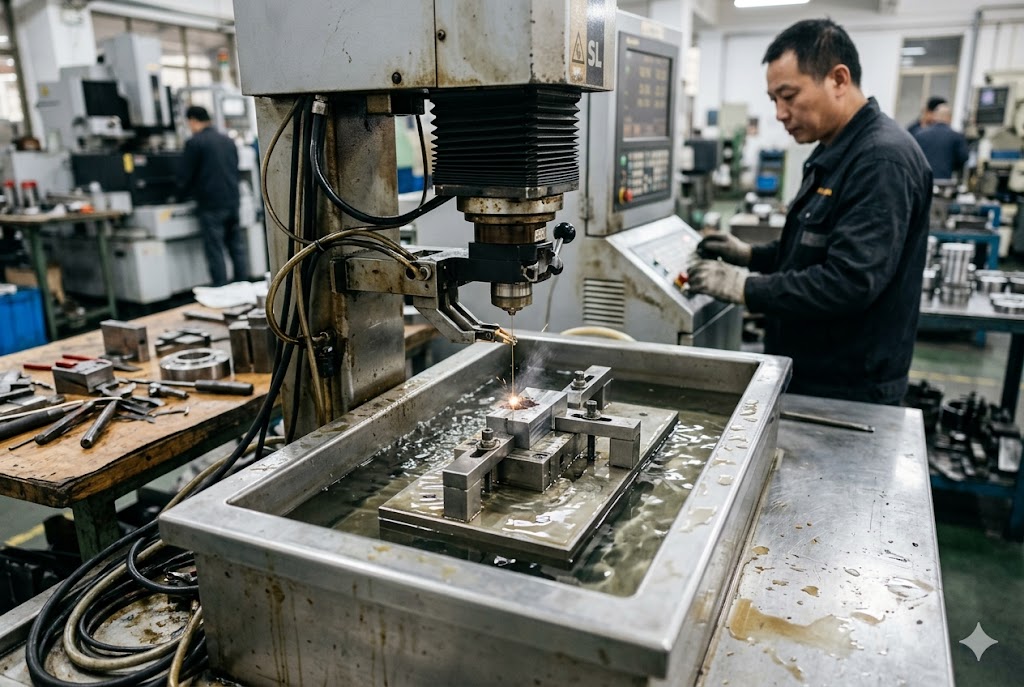
Over the past decade, we have seen many buyers ask the same question: can Chinese wire EDM suppliers really hold micron-level tolerances in production, or are the numbers only marketing claims? The answer depends less on the country itself and more on the machine class, process discipline, material stability, and inspection method behind the quote.
In practical production, strong Chinese wire EDM suppliers can routinely hold +/-0.002 mm, while top-tier slow-wire setups may approach +/-0.001 mm under controlled conditions. Surface finish usually falls between surface roughness parameters such as Ra [1] 0.4 um and 1.6 um, with better skim-cut conditions pushing below Ra 0.2 um.
The most important point for buyers is this: tight tolerance performance is never just a machine-name question. It is the result of process planning, material behavior, temperature control, wire management, and inspection discipline working together.
How Do Chinese Wire EDM Shops Achieve Sub-Micron Tolerances?
In our experience, the biggest difference between average EDM shops and high-precision suppliers is process control. A factory may own a respected machine brand, but without the right cutting sequence and thermal stability in the machine structure [2], the actual part result will still drift.
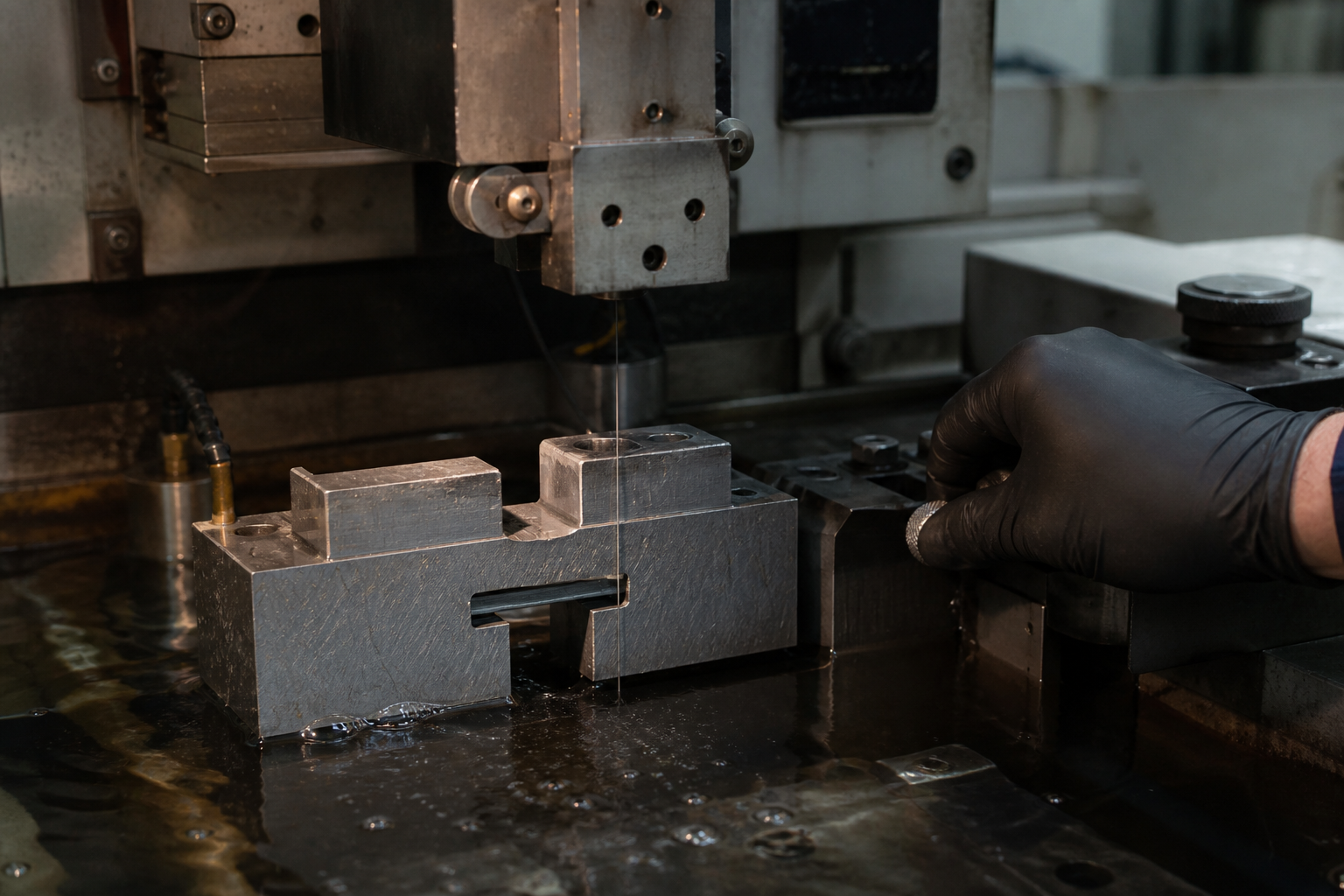
Chinese suppliers reach sub-micron-class results by combining rough cuts with multiple skim cuts, stable dielectric control, careful wire tension management, and climate-stable operating conditions. In real production, 3 to 8 finishing passes are often what separates +/-0.01 mm work from +/-0.002 mm work.
Multi-Pass Skim Cutting
The first pass removes material efficiently, but it also leaves thermal stress, wire lag effects, and a rougher surface. That is why precision suppliers do not stop after the first pass. They run several skim cuts that progressively remove small amounts of material and reduce profile error.
This is where many buyers misunderstand the process. They compare quotations without checking whether the supplier has priced in enough finishing passes. A cheap EDM quote may look attractive, but if the supplier cuts too aggressively, the first-article inspection report often tells a different story.
| Cutting Stage | Typical Removal | Typical Tolerance | Typical Surface Finish |
|---|---|---|---|
| Rough cut | 0.2-0.5 mm per side | +/-0.02 to 0.05 mm | Ra 3.2-6.3 um |
| First skim | 0.03-0.05 mm | +/-0.005 to 0.01 mm | Ra 1.6-3.2 um |
| Second skim | 0.01-0.02 mm | +/-0.002 to 0.005 mm | Ra 0.8-1.6 um |
| Final skim | 0.005-0.01 mm | +/-0.001 to 0.002 mm | Ra 0.2-0.8 um |
Machine Class and Thermal Stability
Japanese and Swiss wire EDM platforms still dominate true high-precision work because they offer better control over wire tension, servo motion, and thermal compensation. That said, we have also seen capable Chinese suppliers using improved domestic slow-wire equipment for demanding tooling jobs.
The hidden variable is room stability. If a supplier is promising micron-level tolerance but the EDM room temperature swings widely during the day, the theoretical machine capability will not be reflected in the part. That is why serious shops also pay attention to air-conditioned measuring rooms [3] and process environment control.
What Material Properties Affect Wire EDM Tolerance Limits?
Not every alloy behaves the same way in wire EDM. Buyers sometimes assume that if one material can hold +/-0.002 mm, another can do the same on the same machine. In practice, material properties change the achievable result.
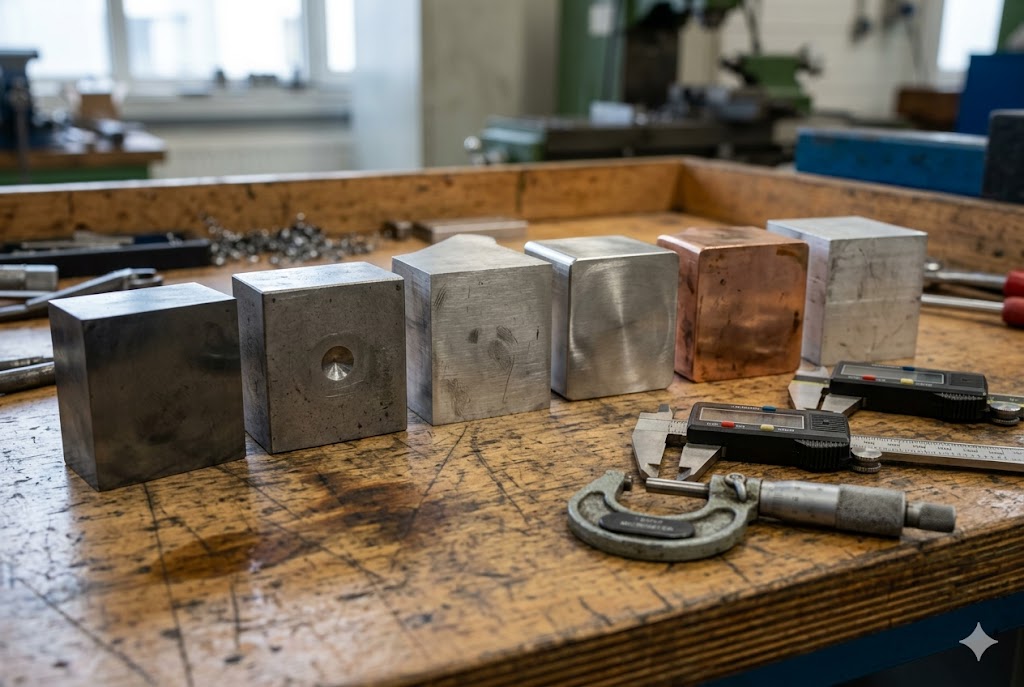
Harder and more dimensionally stable materials such as D2, H13, carbide, and some titanium alloys usually hold tighter EDM tolerances than soft, high-expansion materials such as aluminum and copper alloys. Coefficient of thermal expansion [4], conductivity, and mechanical stiffness all influence the final result.
Hardened Tool Steels and Carbide
Hardened tool steels are among the most forgiving materials for tight-tolerance EDM work because they resist deformation during cutting and remain stable after machining. Carbide can be even better for dimensional stability, though it requires more specialized experience.
Soft and High-Conductivity Materials
Copper and aluminum present more risk. Their conductivity and electrode wear [5] behavior can accelerate instability and magnify dimensional drift. That does not mean they cannot be machined well, but it does mean buyers should not apply the same tolerance assumptions used for hardened steel.
| Material Type | Typical Tolerance Range | Main Risk Factor |
|---|---|---|
| Hardened tool steel | +/-0.001 to 0.002 mm | Low deformation |
| Tungsten carbide | +/-0.001 to 0.0015 mm | Specialized process requirement |
| Titanium alloy | +/-0.002 to 0.003 mm | Slower cutting, wire wear |
| Stainless steel | +/-0.003 to 0.005 mm | Higher thermal movement |
| Copper alloy | +/-0.005 to 0.008 mm | Rapid wear, stress relaxation |
| Aluminum alloy | +/-0.005 to 0.010 mm | High thermal expansion |
Why This Matters in Sourcing
If your drawing calls for a tight number, the right follow-up question is not only "Can you hold this tolerance?" but also "Can you hold it on this material?" That distinction saves time and reduces rework risk later, especially when fatigue of materials [6] or downstream fitting performance matters.
How Do Process Variables Impact Dimensional Consistency?
Even with a good machine and the right material, dimensional consistency still depends on operating variables. This is where strong suppliers separate themselves from factories that can only hit the target occasionally.
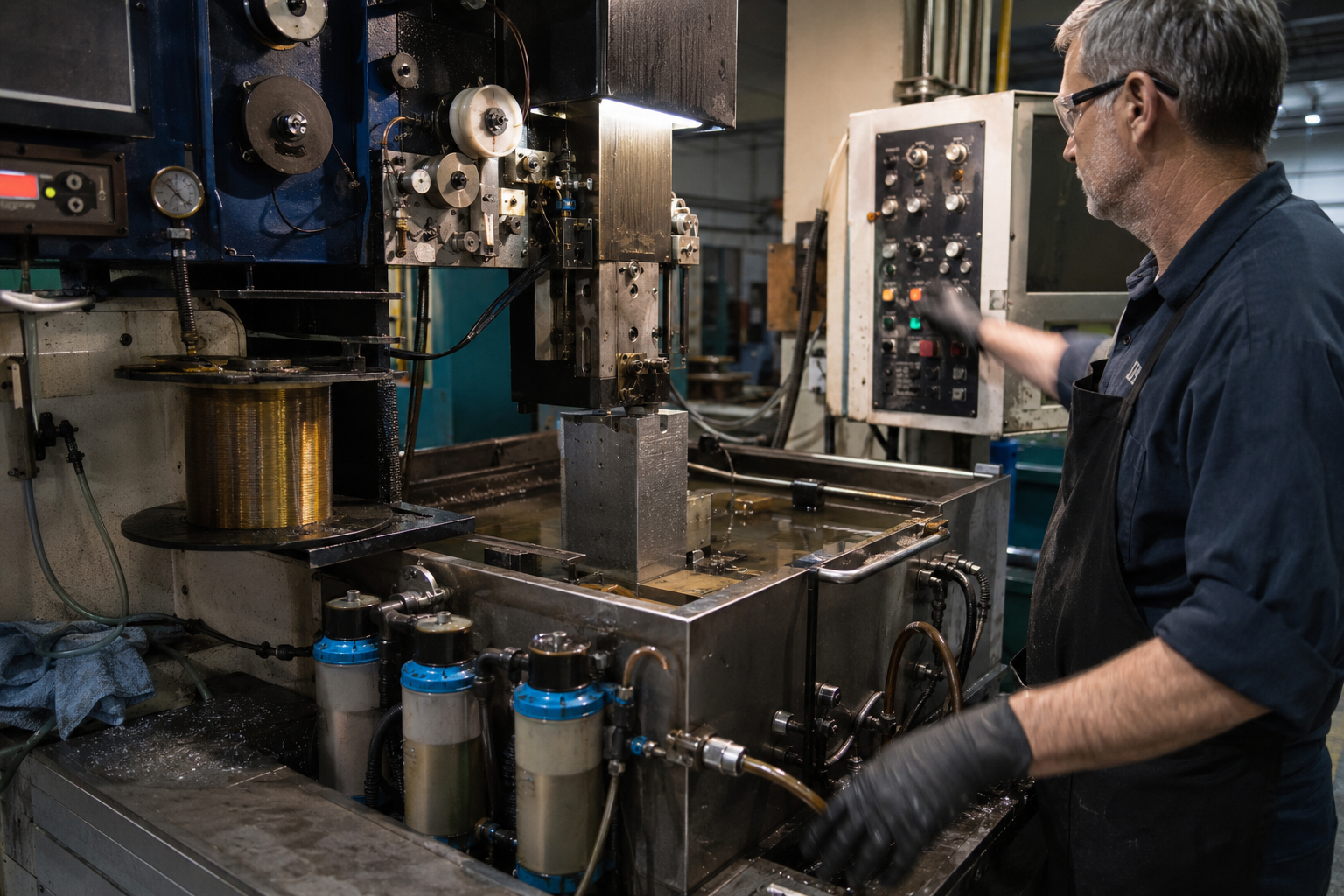
Wire EDM consistency depends heavily on dielectric conductivity, wire diameter, wire tension, cutting height, and flushing conditions. When these variables drift, tolerance performance can move from +/-0.002 mm toward +/-0.006 mm or worse, especially on tall or detailed workpieces.
Dielectric Quality
Deionized water quality directly affects spark stability. If conductivity drifts too high, spark behavior becomes less stable and random profile errors increase. Good suppliers monitor this continuously instead of treating it as a setup-only parameter.
Wire Diameter and Workpiece Height
Smaller wire enables smaller corner radii, but it also increases breakage risk and vibration sensitivity. Tall parts add another challenge because the wire can deflect during cutting, especially if the machine does not compensate well.
| Variable | Why It Matters | Typical Risk if Uncontrolled |
|---|---|---|
| Dielectric conductivity | Controls spark stability | Random geometry error |
| Wire diameter | Limits feature size and corner radius | Breakage or edge inaccuracy |
| Wire tension | Affects line straightness | Profile drift |
| Cutting height | Increases sag and taper risk | Out-of-square geometry |
| Temperature | Changes machine and part size | Dimensional drift |
What Buyers Should Ask
Ask whether the supplier monitors conductivity, what wire sizes they routinely run, how tall the part can be before taper risk increases, and whether the machine operates in a temperature-stable space. These questions are more useful than a generic "Can you do precision EDM?" If the supplier mentions process capability (Cpk) [7], ask for the actual study rather than accepting the term at face value.
What Quality Control Methods Verify Sub-Micron Accuracy?
Any supplier can claim +/-0.002 mm. The harder question is whether they can prove it in a way that survives customer review. For wire EDM sourcing, measurement capability matters just as much as machining capability.
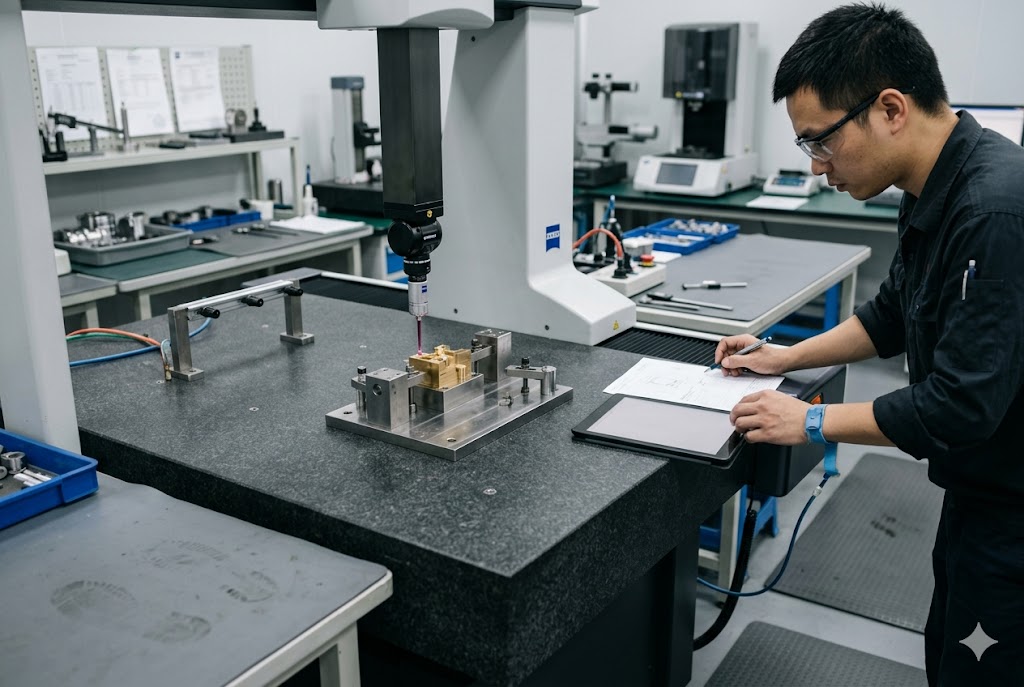
Sub-micron-class EDM work should be verified with capable CMM systems, stable measuring-room conditions, documented inspection routines, and traceable reports. If the inspection system is weaker than the tolerance being claimed, the number on the quotation has little value.
CMM Capability
To verify very tight tolerances, the measuring system needs better resolution than the part tolerance itself. This is why serious precision suppliers invest in high-precision CMM accuracy [8] rather than relying on basic shop-floor inspection alone.
Measuring Room Discipline
If a part is measured while still thermally unstable, the report can look better or worse than the true part condition. Better suppliers control room temperature and allow parts to stabilize before inspection.
Documentation and Third-Party Verification
For higher-risk projects, we prefer suppliers that can provide full first-article reports and are open to supplier assurance services [9] or factory audits [10]. That is often the fastest way to separate real capability from brochure language. On drawing review, buyers should also align tolerance callouts with ISO 1101 geometrical tolerancing rules [11] when those standards apply.
| Inspection Method | Typical Use | Value to Buyer |
|---|---|---|
| In-process checks | Early drift detection | Prevents scrap growth |
| Final CMM report | Confirms critical dimensions | Supports PPAP or FAI review |
| Capability study | Shows process consistency | Helps judge production risk |
| Third-party verification | Confirms supplier claim | Reduces approval uncertainty |
Conclusion
The tightest dimensional tolerance achievable with wire EDM in China is not defined by nationality. It is defined by whether the supplier has the right machine class, material understanding, process discipline, and measurement system for the job. Buyers who ask the right technical questions early usually avoid the most expensive mistakes later.
Footnotes
1. Explains how Ra and related roughness values are defined and used. ↩
2. Shows how wire EDM machine design improves thermal stability and repeatability. ↩
3. Describes measuring-room temperature control for high-accuracy metrology work. ↩
4. Defines thermal expansion and why temperature changes alter dimensions. ↩
5. Summarizes electrode wear behavior and why it affects machining accuracy. ↩
6. Reviews fatigue behavior and why surface condition matters to part life. ↩
7. Defines Cpk and shows how capability is judged against specifications. ↩
8. Example of a sub-micron-class CMM used for precision inspection. ↩
9. Shows third-party supplier assurance options for supply-chain verification. ↩
10. Outlines factory audit services for checking supplier capability and systems. ↩
11. Official ISO reference for geometrical tolerancing language on drawings. ↩