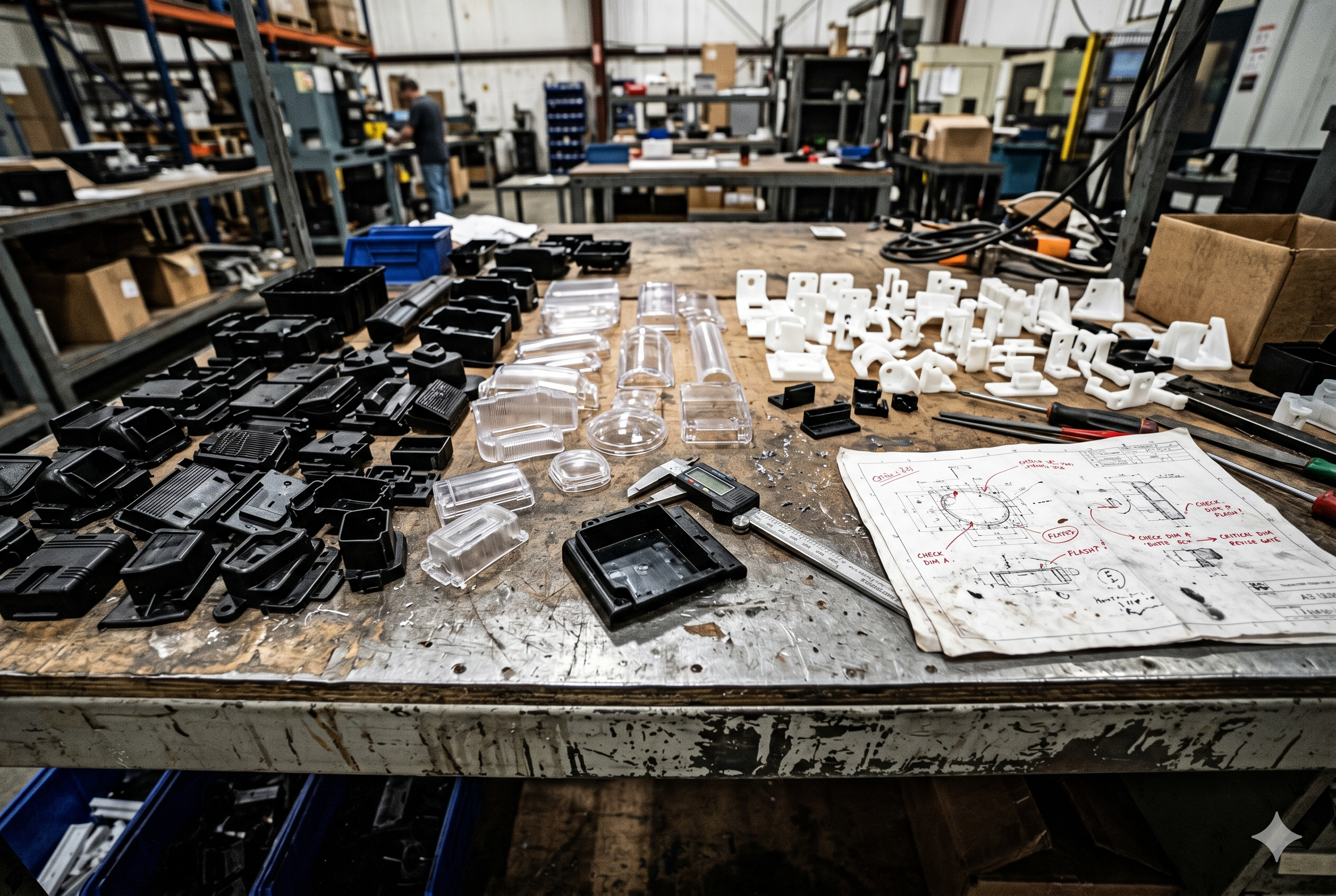
Every week, our team fields the same question from purchasing managers who are staring at a drawing and trying to figure out which process will actually deliver. The wrong choice doesn't just cost money — it causes rework, delays, and unhappy downstream customers.
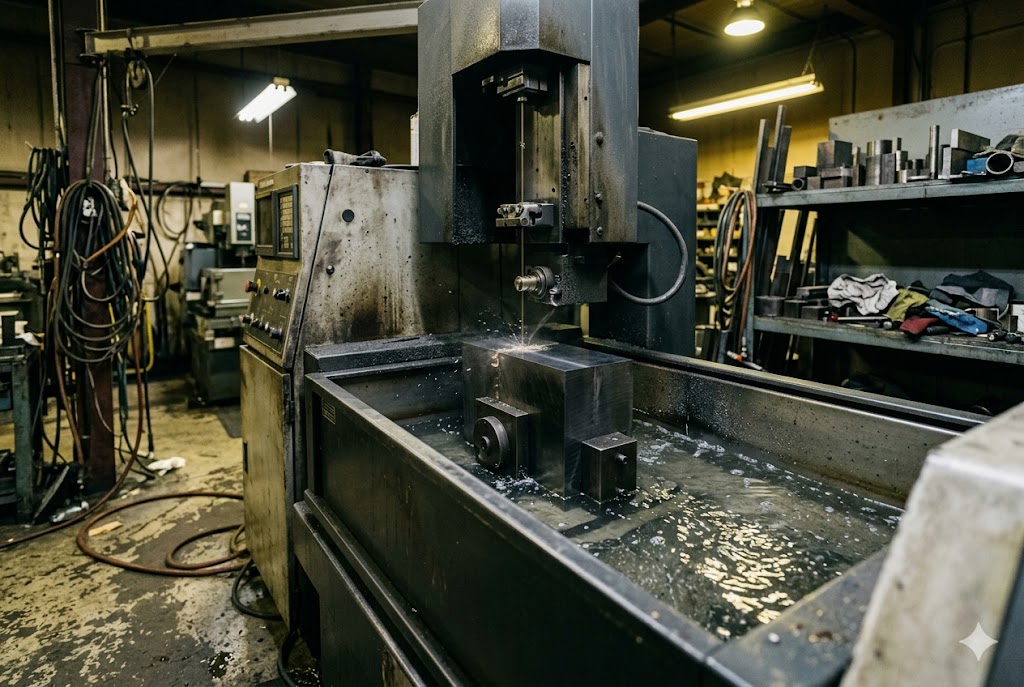
Wire EDM uses electrically charged sparks in dielectric fluid to erode conductive metals without physical contact. Laser cutting uses a focused thermal beam to cut a much wider range of materials. The right choice depends on your material, your tolerance, your thickness, and your volume.
Both processes are mature and capable. But they solve different problems. Here is how to think through the decision clearly.
Is Wire EDM More Accurate Than Laser Cutting for Tight-Tolerance Metal Parts?
When our engineers review customer drawings with tolerances below ±0.002 inches, there is rarely a debate. The process selection becomes obvious fast, and it almost always points in the same direction.
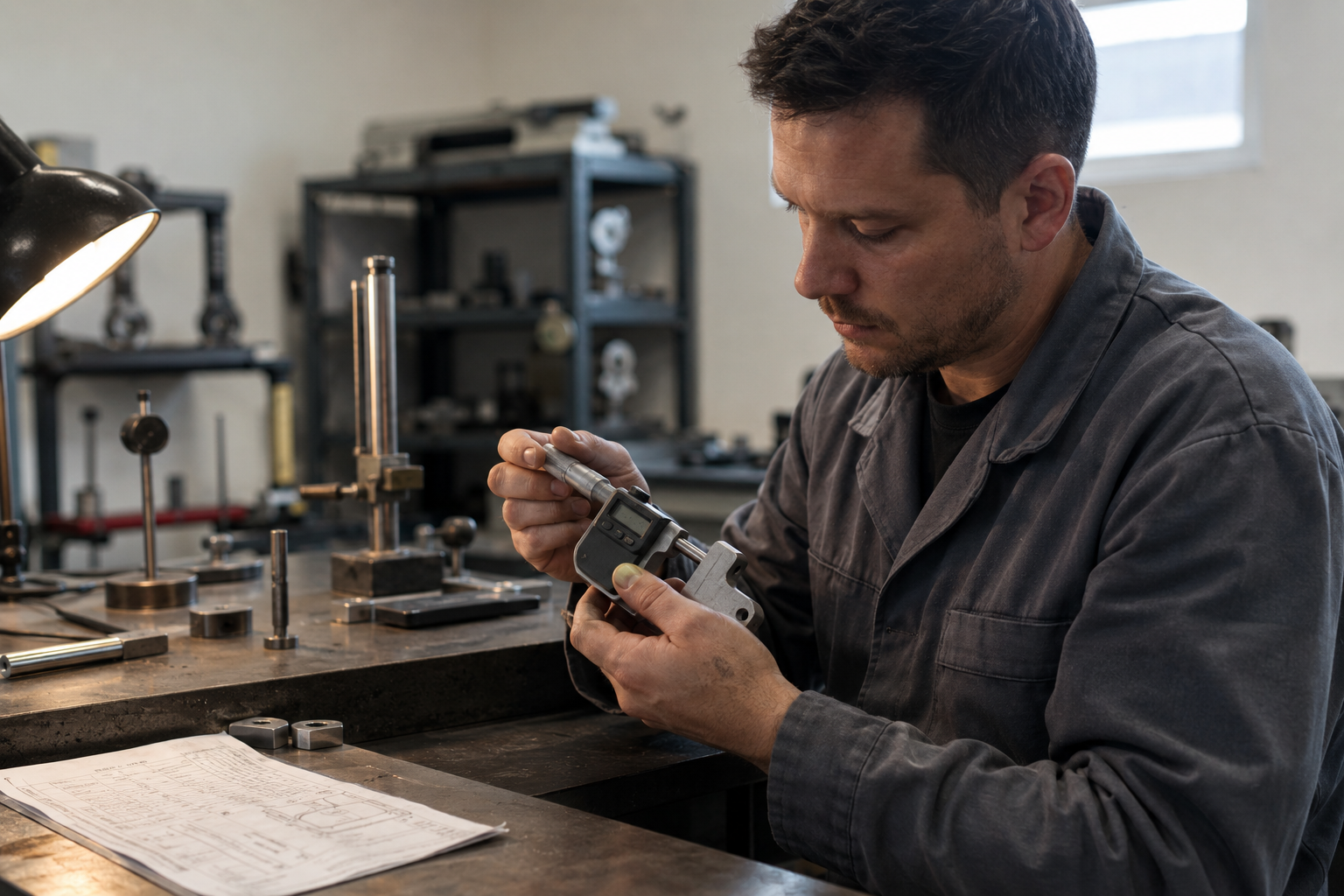
Wire EDM achieves tolerances as tight as ±0.0001 inches, which is ten to twenty times tighter than what laser cutting can reliably deliver. Laser cutting typically holds ±0.001–0.002 inches on thin stock, and that range widens significantly as material thickness increases. For tight-tolerance metal parts, wire EDM is the more accurate process.
Why the Accuracy Gap Exists
The fundamental reason wire EDM is more accurate comes down to physics. Wire EDM never physically touches the workpiece. A thin brass wire — typically 0.004–0.012 inches in diameter — is held under tension and passes through the part. Electrical sparks jump across a precise gap between the wire and the metal, eroding material one microscopic layer at a time. There is no cutting force. There is no blade pressure. There is no deflection.
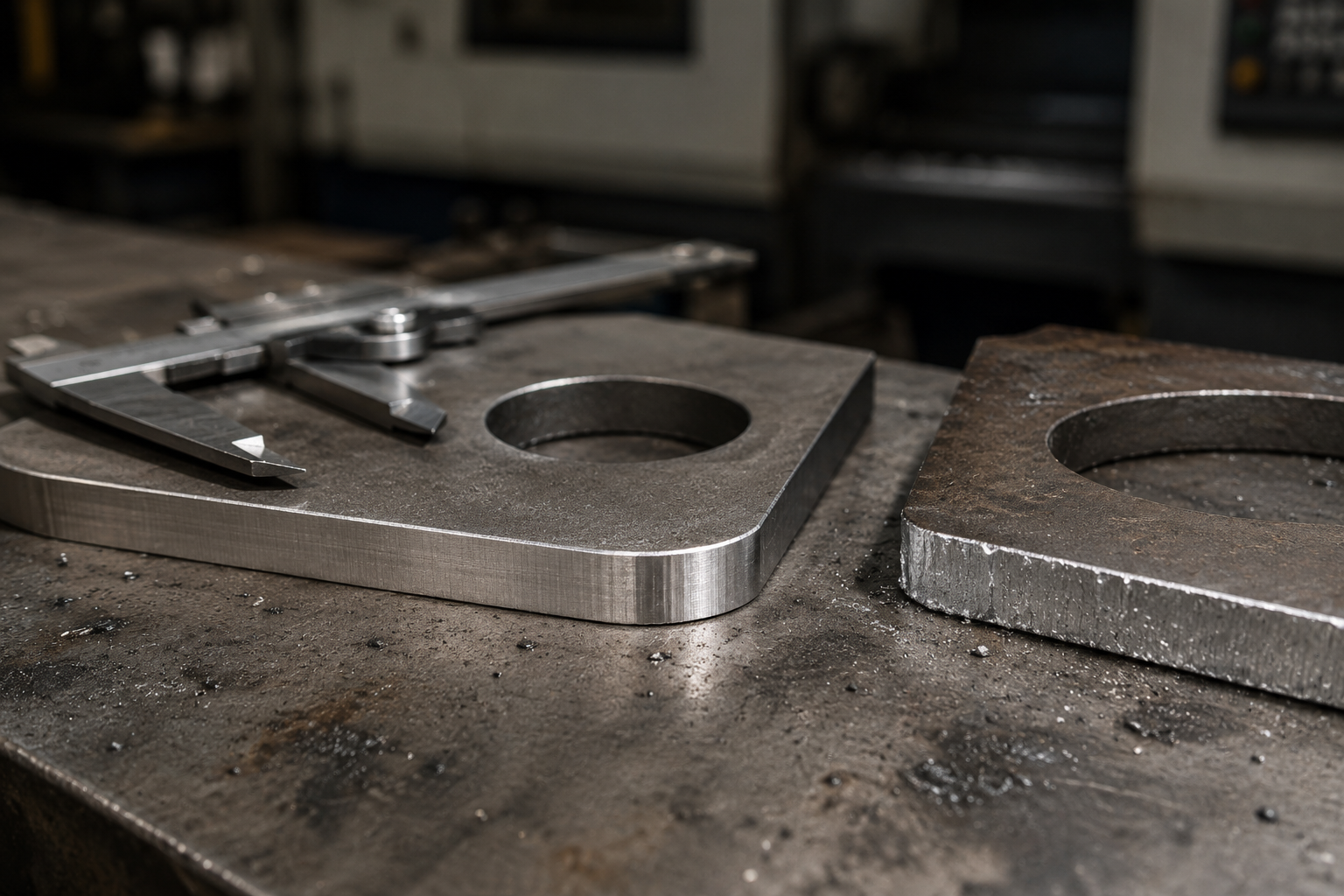
Laser cutting works differently. A focused beam of light — typically a fiber laser or CO₂ laser — heats the metal to its melting or vaporization point. The beam removes material by thermal energy. This introduces two sources of inaccuracy that wire EDM simply does not have: heat distortion and kerf variation.
Tolerance Comparison by Process
| Parameter | Wire EDM | Laser Cutting |
|---|---|---|
| Typical tolerance | ±0.0001–0.0005 in | ±0.001–0.002 in (thin) |
| Tolerance on thick stock (>0.25 in) | Remains stable | Degrades noticeably |
| Surface roughness (Ra) | ~0.8 μm | ~12 μm |
| Kerf width consistency | Very consistent | Varies with speed and focus |
| Repeatability across a batch | Excellent | Good on thin material |
What This Means for Your Drawing
If your drawing carries GD&T callouts for flatness, perpendicularity, or true position 1 inside ±0.001 inches, laser cutting is unlikely to pass inspection on thick or hard materials. Wire EDM holds those numbers reliably, even on production runs.
When Laser Accuracy Is Good Enough
That said, laser cutting is not inaccurate by any practical standard. For sheet metal brackets, enclosures, flanges, and structural plates where tolerances are ±0.005 inches or looser, a modern fiber laser with a skilled operator will hit the drawing every time. The issue only arises when you push toward tighter numbers, thicker stock, or harder alloys.
The Role of Material Thickness
Wire EDM can cut electrically conductive metal up to 12 inches thick 2 while maintaining dimensional accuracy throughout the cut depth. Laser cutting begins to lose edge perpendicularity and kerf consistency beyond roughly 0.25 inches. On thicker plate, the beam diverges slightly as it travels deeper into the material. The top edge and bottom edge of the cut are no longer the same width. That taper is invisible on thin parts and very real on thick ones.
Which Process Handles Hardened Steel or Carbide Better — EDM or Laser?
In our experience sourcing and producing parts for industries like tooling, mold-making, and aerospace, hardness is the variable that ends the conversation fastest. Once you are above a certain threshold, only one process is truly viable.
For hardened tool steels above 45 HRC and exotic alloys like tungsten carbide, wire EDM is the clear choice. Laser cutting causes rapid beam scatter and thermal distortion on extremely hard materials, degrading cut quality and dimensional accuracy. Wire EDM is indifferent to hardness — it cuts carbide as readily as it cuts soft aluminum.
Why Hardness Does Not Affect Wire EDM
Wire EDM removes material through electrical discharge. The spark erodes the metal regardless of its mechanical hardness. Tungsten carbide, D2 tool steel at 62 HRC, M2 high-speed steel, Inconel 3 — all of these are just conductive materials to a wire EDM machine. The hardness that makes these materials nearly impossible to mill or grind conventionally is completely irrelevant to spark erosion.
This is one of the most important advantages wire EDM holds over almost every other cutting method. Parts can be fully hardened first and then cut to final dimension. That eliminates the distortion that normally occurs during heat treatment after machining.
Material Hardness and Process Suitability
| Material | Hardness | Wire EDM | Laser Cutting |
|---|---|---|---|
| Mild steel (A36) | ~120 HB | Excellent | Excellent |
| Stainless steel 304 | ~200 HB | Excellent | Good |
| Tool steel D2 (hardened) | 58–62 HRC | Excellent | Poor — thermal distortion |
| Tungsten carbide | ~90 HRA | Excellent | Not recommended |
| Titanium alloy | ~36 HRC | Excellent | Fair — requires inert gas |
| Inconel 718 | ~40 HRC | Excellent | Difficult — reflects beam |
What Happens When You Try to Laser-Cut Carbide
Carbide reflects a significant portion of the laser beam at certain wavelengths. The energy that does enter the material creates localized thermal stress. Carbide is brittle. Thermal stress in a brittle material causes micro-cracking. The edges become chipped and inconsistent. For any precision tooling application — punch and die sets, wear plates, cutting inserts — this is not acceptable.
The Sequence That Changes Everything
A workflow that many tooling manufacturers use: rough-machine the part in its annealed state using conventional milling, send it for heat treatment to reach final hardness, then use wire EDM to cut the final profile and critical features to drawing tolerance 4. This sequence is not possible with laser cutting because the laser's thermal input can re-temper or crack a hardened workpiece.
Does Laser Cutting Leave a Heat-Affected Zone That Impacts My Part's Performance?
This is a question we hear often from customers who specify laser cutting on their RFQ and then discover mid-project that their parts are failing inspection or showing unexpected behavior in service. The heat-affected zone is real, and it matters.
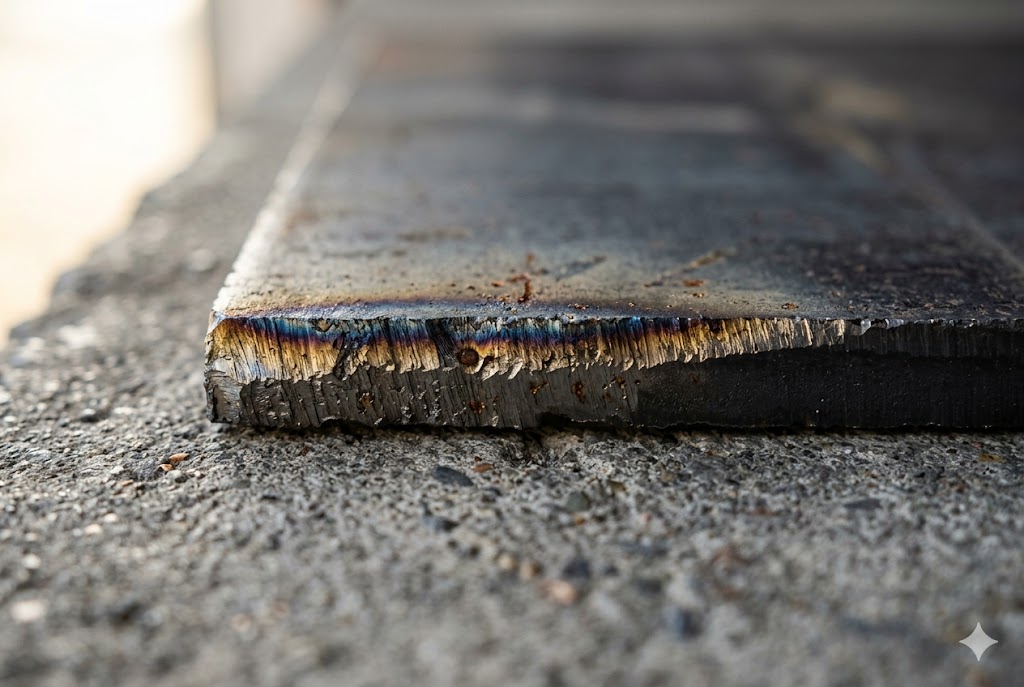
Yes, laser cutting always creates a heat-affected zone (HAZ). The HAZ is a narrow band of metal alongside the cut edge where the base material's microstructure and hardness have been altered by heat. Its depth ranges from 0.1mm to over 1mm depending on material, thickness, and laser parameters. For most structural applications it is acceptable, but for hardened, fatigue-critical, or precision-fit parts, it can cause real performance problems.
What the HAZ Actually Does to Your Metal
When a laser beam passes through metal, it raises the local temperature to thousands of degrees within milliseconds. The material directly in the kerf vaporizes or melts. The material just beside it — the HAZ — heats up and cools down rapidly. This rapid thermal cycle changes things:
- Hardened steels lose hardness in the HAZ because the rapid heat cycle effectively re-tempers the material locally.
- Stainless steels can sensitize, meaning chromium carbides precipitate at grain boundaries, reducing corrosion resistance near the edge.
- Aluminum alloys experience softening in heat-treatable grades like 6061-T6 and 7075-T6, because the peak-aged condition is disrupted by the heat.
- Residual stress is introduced into the edge zone, which can cause dimensional distortion after the part is released from fixtures.
HAZ Comparison: Wire EDM vs. Laser Cutting
| Factor | Wire EDM | Laser Cutting |
|---|---|---|
| Heat-affected zone | Negligible (~0.01mm recast layer) | 0.1–1.0+ mm depending on parameters |
| Edge surface roughness (Ra) | ~0.8 μm | ~12 μm |
| Residual stress at edge | Virtually zero | Present — can cause distortion |
| Post-process required | Usually none | Sometimes deburring or secondary grinding |
| Risk of micro-cracking | Very low | Higher on brittle or hardened materials |
The Recast Layer on Wire EDM
To be precise: wire EDM does produce a very thin recast layer — typically 0.005–0.015mm thick — where resolidified metal sits on the cut surface. For most applications, this is inconsequential. For the most critical aerospace or medical applications, a light skim pass or abrasive finishing removes it entirely. It is not comparable to a laser HAZ in depth or impact.
When the HAZ Is and Is Not a Problem
For low-carbon mild steel structural parts, the HAZ from laser cutting 5 is generally not a performance concern. The material in the HAZ is still serviceable steel. But for the following applications, the HAZ needs to be taken seriously:
- Parts that will experience cyclic fatigue loading, where the HAZ creates a stress concentration in aerospace components 6
- Hardened dies and punches where the edge hardness is part of the functional specification
- Medical implants or precision instruments where dimensional stability after processing is required
- Tight-fit assemblies where even small amounts of edge distortion affect the fit-up
When Is Laser Cutting a Cost-Effective Alternative to Wire EDM for My Parts?
We work with purchasing managers who are responsible for managing cost and delivery alongside quality. The right process is not always the most precise one — it is the one that hits the drawing requirements at the lowest total cost per good part. Laser cutting wins that calculation more often than many people expect.
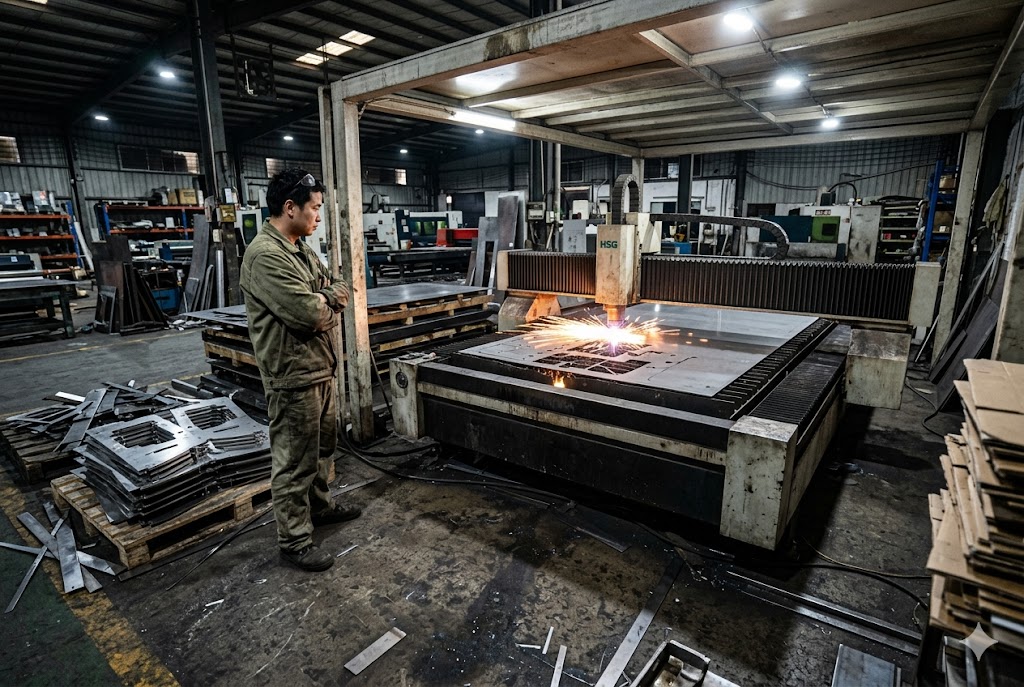
Laser cutting is more cost-effective than wire EDM when your parts use thin-to-medium sheet stock under 0.25 inches, require tolerances no tighter than ±0.002 inches, involve non-conductive or mixed materials, or are produced in high volumes. In real batch production, laser cutting has been shown to reduce cycle time by roughly 40% compared to wire EDM for qualifying part geometries.
The Speed and Volume Advantage of Laser Cutting
Wire EDM is inherently slow. The spark erosion process removes material in very small increments per pass. Complex profiles often require multiple passes at progressively finer settings to achieve the target surface finish and tolerance. Setup time is also significant — threading the wire, calibrating the cut path, and confirming the first article all take time.
A modern fiber laser cuts thin steel, aluminum, or stainless at speeds measured in meters per minute 7. For a production run of 500 identical brackets cut from 3mm stainless plate, a laser will complete the job in a fraction of the time wire EDM would require. The economics are clear.
Material Compatibility: The Decisive Factor
Wire EDM has one hard limit that laser cutting does not: it only works on electrically conductive materials. If your part is plastic, composite, wood, fabric, ceramic, or any non-conductive substrate, wire EDM is simply not an option. Laser cutting handles all of these materials, making it the default for mixed-material production environments.
Cost Decision Matrix
| Scenario | Better Choice | Reason |
|---|---|---|
| Thin sheet metal (<0.25 in), loose tolerance | Laser | Speed advantage, lower cost per part |
| Hardened steel, tight tolerance | Wire EDM | Accuracy, no HAZ |
| High-volume production run, moderate tolerance | Laser | Cycle time and unit cost |
| Single-piece or low-volume precision part | Wire EDM | Setup cost amortized, accuracy needed |
| Non-conductive material | Laser | Wire EDM not applicable |
| Carbide or exotic alloy above 45 HRC | Wire EDM | Laser damages material |
| Complex internal profile, thin walls | Wire EDM | No cutting force, no distortion |
| Structural plate, flanges, enclosures | Laser | Speed and cost efficiency |
The Hybrid Approach That Leading Manufacturers Use
In aerospace and medical device manufacturing, a hybrid strategy is emerging. Laser cutting handles rough profiling and bulk material removal quickly and cheaply. Wire EDM then runs final finish passes on the critical mating surfaces, hole patterns, and tolerance-critical features 8. This approach captures the cycle time advantage of laser cutting while preserving the dimensional precision that wire EDM delivers. It is a more sophisticated procurement decision, but for the right part geometry, it reduces total cost while meeting drawing requirements.
Floor Space and Operating Cost
Wire EDM machines have a significantly larger physical footprint 9 — up to 10–12 feet square — and carry continuous consumable costs from wire replacement. A modern fiber laser occupies roughly half that floor space and delivers a lower cost-per-part at volume despite a higher upfront capital investment. For job shops and contract manufacturers, this means laser cutting capacity is more broadly available and often more competitively priced for qualifying work.
Conclusion
Wire EDM and laser cutting are both excellent processes. Wire EDM wins on precision, hardness, and HAZ-free edges. Laser cutting wins on speed, material range, and cost at volume. Match the process to your drawing, your material, and your production needs. For parts where both processes could theoretically qualify, getting a detailed tolerance and cost comparison from your wire EDM supplier 10 is the fastest way to confirm the right path forward.
Footnotes
1. Explains GD&T true position callouts and how tolerance zones are defined in precision manufacturing drawings. ↩︎
2. Ardel Engineering details wire EDM capability for tolerances as tight as ±0.0001″ on conductive metals. ↩︎
3. Peer-reviewed study on wire EDM machinability and surface characteristics in Inconel 718 superalloy. ↩︎
4. Worthy Hardware explains achievable wire EDM tolerances across different materials including hardened steels. ↩︎
5. Amber Steel provides an overview of how HAZ affects different metals and varies across cutting processes. ↩︎
6. BLM Group covers how laser cutting HAZ impacts fatigue performance in aerospace-grade titanium and nickel alloys. ↩︎
7. STYLECNC documents fiber laser cutting speeds and thickness ranges for steel, stainless, and aluminum. ↩︎
8. Fathom Manufacturing outlines wire EDM capabilities and how it complements laser cutting in hybrid workflows. ↩︎
9. China Machining Solutions compares wire EDM single-cut vs. multi-cut precision ranges and operational constraints. ↩︎
10. Approved Sheet Metal documents fiber laser throughput advantages for high-volume sheet metal fabrication. ↩︎