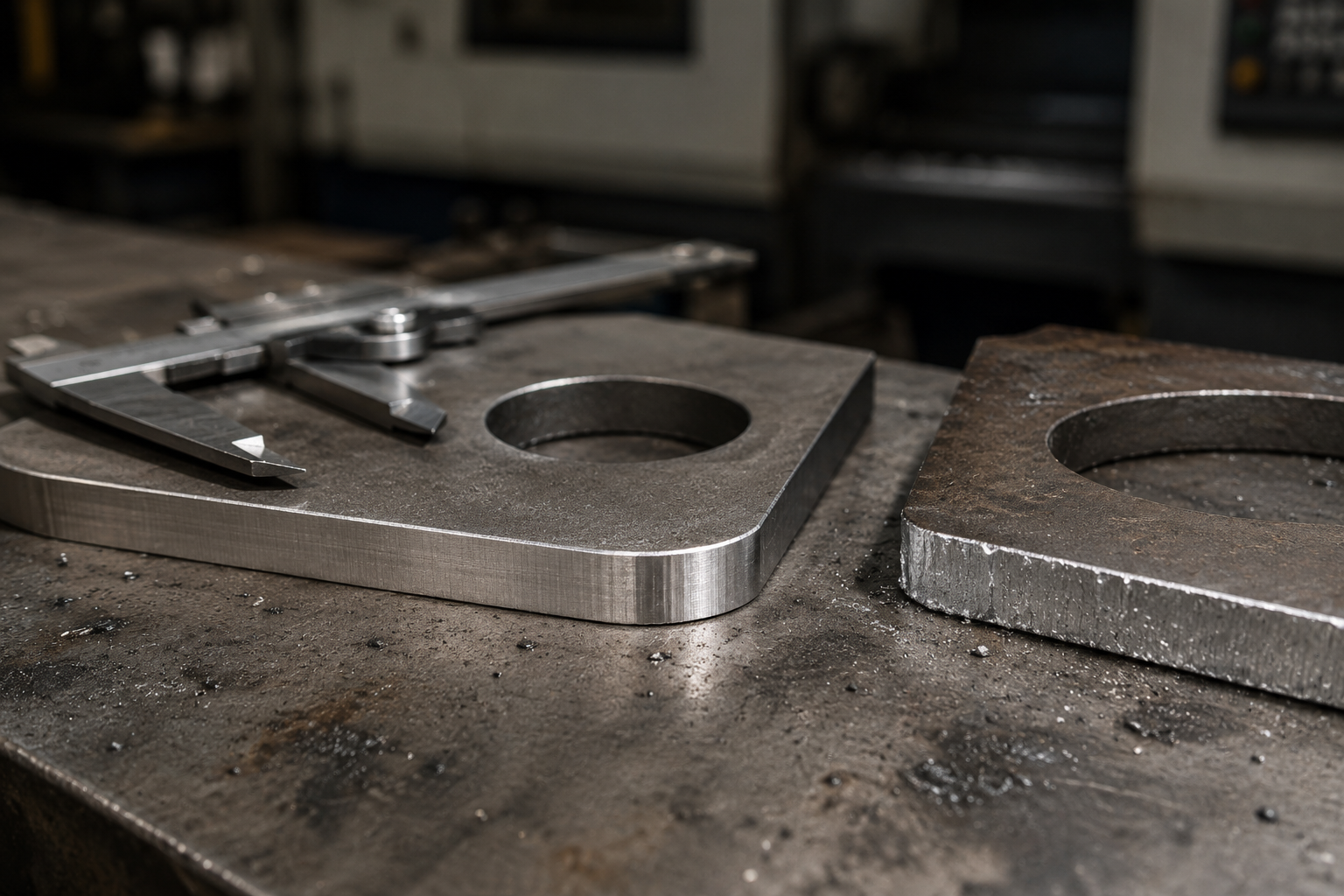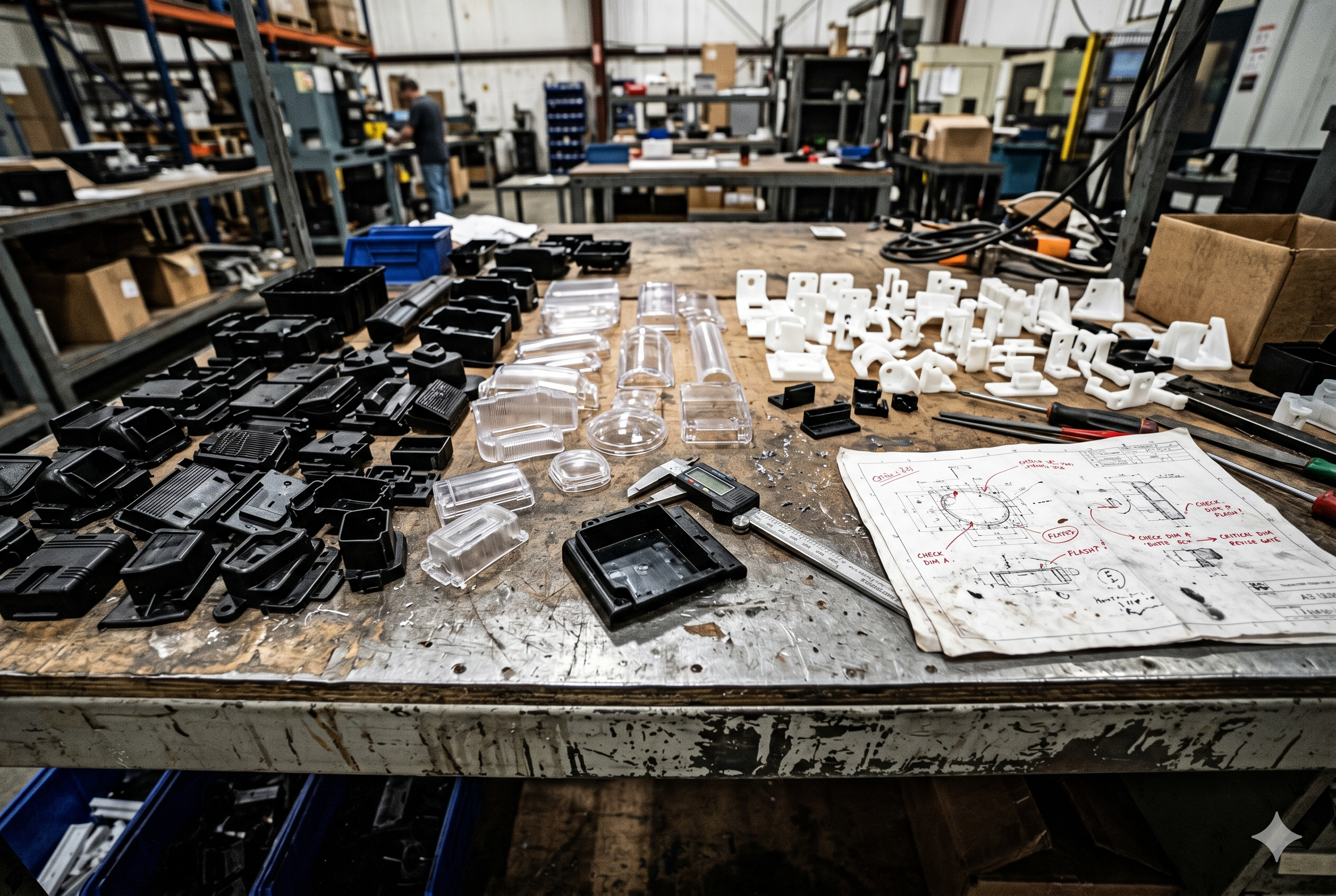

Every week, our team fields questions from buyers who received parts that looked right on paper but failed inspection. Many of those failures trace back to one overlooked decision: which type of wire EDM was used. The wrong choice can mean the difference between a part that fits and one that doesn't.
Slow-wire EDM achieves tolerances of ±0.001–0.003 mm and surface roughness of Ra 0.1–0.4 µm. Fast-wire EDM typically delivers ±0.01–0.02 mm and Ra 1.6–3.2 µm. That is a precision gap of roughly one order of magnitude between the two technologies under real shop conditions in China.
This gap matters far more than most buyers realize when they first start sourcing precision parts from China. The sections below break down each key question so you can make the right specification decision before your order goes to production.
Can Fast-Wire EDM Achieve the Same Surface Finish as Slow-Wire EDM?
We see this question come up constantly, and the short answer is no — not under standard production conditions. Buyers often assume that because both machines use wire to cut metal, the output quality should be comparable. That assumption leads to rejected parts and costly rework cycles.
Fast-wire EDM cannot match the surface finish of slow-wire EDM under standard conditions. Slow-wire EDM achieves Ra 0.1–0.4 µm using deionized water as dielectric fluid and a continuously fed wire. Fast-wire EDM typically produces Ra 1.6–3.2 µm due to wire vibration, electrode wear accumulation, and a less stable cutting arc.
Why the Wire Mechanism Matters
The core difference is mechanical. In a fast-wire machine, the wire reciprocates back and forth at high speed — sometimes 400 to 600 meters per minute. This causes the wire to vibrate. That vibration introduces micro-positional errors on each pass. The wire also accumulates electrode wear as it is reused repeatedly, which changes the cutting geometry over time.
Slow-wire machines feed fresh wire continuously in one direction at a much slower rate, typically 0.1 to 15 meters per minute. There is no wire reuse. There is no vibration from direction reversal. The cutting arc remains stable throughout the entire operation.
The Dielectric Fluid Difference
This is a factor that rarely appears in supplier spec sheets, but it is critical. Slow-wire EDM uses deionized water as the dielectric fluid 1. This fluid has very low conductivity and high flushing efficiency. It produces a thin, uniform recast layer on the workpiece surface — typically below 2 µm.
Fast-wire EDM uses a water-based emulsion. This produces a thicker and less uniform recast layer, often between 10–20 µm. For most structural parts, this makes no visible difference. But for components subject to cyclic loading, thermal stress, or tight dimensional tolerance stacking 2, the thicker recast layer reduces fatigue life and introduces surface irregularities that are difficult to remove without additional finishing operations.
Medium-Speed EDM: A Practical Middle Ground
China developed a hybrid technology called medium-speed wire EDM, known locally as 中走丝. It applies multiple cutting passes on fast-wire hardware to progressively refine the surface. The results sit between the two traditional categories.
| Technology | Surface Roughness (Ra) | Dimensional Tolerance | Recast Layer Thickness |
|---|---|---|---|
| Fast-wire EDM | 1.6–3.2 µm | ±0.01–0.02 mm | 10–20 µm |
| Medium-speed EDM (中走丝) | 0.4–0.8 µm | ±0.005 mm | 4–8 µm |
| Slow-wire EDM | 0.1–0.4 µm | ±0.001–0.003 mm | Below 2 µm |
Medium-speed EDM is a cost-effective option when slow-wire precision is not strictly required but fast-wire output is not good enough. It is widely available across small and medium factories in China and represents a legitimate upgrade path without committing to slow-wire pricing.
What This Means for Your Parts
If your drawing requires a mirror-like surface finish, complex profile tolerances, or specific Ra values for sealing or mating surfaces 3, fast-wire EDM is not a suitable process. Ask your supplier explicitly which machine type they plan to use. Do not assume the answer.
Which Wire EDM Type Should I Specify for Parts With Tolerances Tighter Than ±0.01mm?
When a tolerance specification arrives at our sourcing desk, the process selection decision is not optional — it is the first thing we check. Specifying the wrong process is one of the most common and preventable causes of first-article inspection failure on precision components.
For any part requiring tolerances tighter than ±0.01 mm, slow-wire EDM is the correct process specification. Fast-wire EDM cannot reliably hold tolerances below ±0.01 mm under standard production conditions. Medium-speed EDM may approach ±0.005 mm but should be validated by supplier capability data before use.
Understanding the Tolerance Boundary
The ±0.01 mm mark is not arbitrary. It represents the practical lower limit of fast-wire EDM under well-maintained, skilled-operator conditions in China. In real production environments, where machine age, wire tension consistency, and operator experience vary, the actual achievable tolerance on fast-wire machines is often closer to ±0.015–0.02 mm.
Slow-wire machines regularly hold ±0.002–0.003 mm in production. High-end slow-wire machines in temperature-controlled environments 4 can hold ±0.001 mm. That is a 10x improvement over fast-wire output.
The Role of Machine Age and Factory Environment
This is a practical concern specific to China's manufacturing landscape. Fast-wire EDM machines dominate the market, accounting for an estimated 80–90% of all wire EDM equipment in use across the country. Many of those machines are 8–15 years old and have received inconsistent maintenance.
Wire tension degrades on older machines. Guide wear introduces angular errors. Accumulated machine frame wear adds positional drift. These issues compound each other. A fast-wire machine that was once capable of ±0.01 mm may produce ±0.02 mm or worse in its current condition.
Thermal stability is another hidden variable. Slow-wire precision outcomes are especially sensitive to workshop temperature. A factory without temperature control can lose 30–50% of the machine's theoretical accuracy due to thermal drift in the machine frame and workpiece fixture. Slow-wire operations targeting tight tolerances should ideally be run in climate-controlled rooms.
Tolerance Selection by Application
| Application | Recommended Process | Minimum Achievable Tolerance |
|---|---|---|
| General structural cutouts | Fast-wire EDM | ±0.02 mm |
| Jig and fixture components | Medium-speed EDM | ±0.005–0.008 mm |
| Precision mold inserts | Slow-wire EDM | ±0.002–0.003 mm |
| Automotive tooling profiles | Slow-wire EDM | ±0.001–0.003 mm |
| Electronics connector tooling | Slow-wire EDM | ±0.001–0.002 mm |
What to Write on Your Drawing
Do not leave the process unspecified if your tolerance is below ±0.01 mm. Write "Slow-wire EDM required" directly on the drawing or in the purchase order technical specification. If you accept medium-speed EDM as an alternative, state that explicitly along with a required capability demonstration or Cpk data 5.
Leaving the process open for supplier discretion on tight-tolerance parts is a risk that regularly produces nonconforming first articles.
Chinese Slow-Wire Machine Quality
It is worth noting that Chinese-manufactured slow-wire machines have improved significantly. Brands such as Suzhou Sanguang and Beijing AGIE Charmilles joint-venture products now achieve comparable tolerances to Swiss and Japanese OEM machines for standard mold and die applications. This has lowered the cost of slow-wire access across China's supplier base. You do not always need to pay a premium for Swiss-machine shops to get credible slow-wire precision.
Is Slow-Wire EDM Worth the Higher Cost for My Production Volume?
Cost questions are fair questions. Our job is not to push buyers toward the most expensive process. It is to match the process to the requirement so that the first article passes and the production run delivers. That sometimes means slow-wire. Sometimes it does not.
Slow-wire EDM typically costs 2–4 times more per cutting hour than fast-wire EDM in China. Whether this cost is justified depends on your tolerance requirements, surface finish specifications, and the downstream cost of nonconformance. For high-precision parts, the cost of rework or scrap almost always exceeds the slow-wire premium.
Breaking Down the Cost Drivers
Slow-wire EDM costs more for several reasons. First, the machine capital cost is higher. A slow-wire machine costs roughly 3–8 times more than a comparable fast-wire machine. Factories pass that amortization cost to the buyer. Second, cutting speed is lower. Slow-wire machines cut at a fraction of the speed of fast-wire machines, which means more machine time per part. Third, consumables are more expensive. Fresh wire is consumed continuously and cannot be reused.
On the other side, fast-wire EDM is fast and cheap to run. For parts where ±0.02 mm is sufficient and surface finish is not critical, fast-wire is the rational choice.
Volume Considerations
Production volume changes the calculation. For low-volume, high-precision parts — such as prototype mold inserts, jig components, or aerospace tooling 6 — the slow-wire premium per part is often a small fraction of the total project cost. Here, the quality risk of using fast-wire EDM far outweighs the per-piece cost difference.
For high-volume runs of medium-tolerance parts, medium-speed EDM often provides the best balance. It is slower than fast-wire but faster than slow-wire, and it achieves tolerances that eliminate the scrap rate risk associated with fast-wire on tighter specifications.
| Scenario | Recommended Process | Cost Justification |
|---|---|---|
| Low volume, tight tolerance (±0.002 mm) | Slow-wire EDM | Rework/scrap cost exceeds slow-wire premium |
| Medium volume, medium tolerance (±0.005 mm) | Medium-speed EDM | Balance of cost and quality risk |
| High volume, loose tolerance (±0.02 mm) | Fast-wire EDM | Fast-wire cost efficiency is decisive |
| Mold inserts for automotive tooling | Slow-wire EDM | Industry standard; customer audit requirement |
| Prototype evaluation parts | Slow-wire EDM | First-article pass rate is critical |
The Hidden Cost of Getting It Wrong
Buyers sometimes approve fast-wire EDM to save unit cost, then face inspection failures, re-machining charges, and delayed shipments. Those costs are real. A rejected batch of precision mold inserts does not just cost the part price. It costs the inspection time, the return freight, the re-machining lead time, and potentially a line stoppage at the customer's facility.
When we evaluate supplier quotations for our clients, we always ask the supplier to confirm which process and which machine will be used. If the tolerance is below ±0.01 mm and the supplier quotes fast-wire, we flag it immediately before the order is placed, not after the first article fails.
The Market Access Dimension
As Chinese suppliers increasingly target export markets requiring ISO and DIN geometric tolerance compliance 7 on tooling, the decision is no longer purely about unit cost. Buyers in the US and Canada sourcing precision components for manufacturers now often include process specifications in their quality agreements. Slow-wire EDM capability is increasingly a supplier qualification criterion, not just a process option. This is reshaping capital investment decisions in China's precision machining sector.
Do Chinese Suppliers Clearly Distinguish Between Slow-Wire and Fast-Wire EDM Capabilities?
This is one of the most practically important questions a buyer can ask, and the honest answer is: not always. We have visited factories across China that list both slow-wire and fast-wire EDM in their capability sheets without differentiating the achievable precision of each. This creates real risk in the sourcing process.
Many Chinese suppliers do not clearly distinguish slow-wire and fast-wire EDM capabilities in their marketing materials or quotations. Buyers should explicitly ask which machine type will be used, request machine model and year data, and verify temperature control conditions before approving a precision EDM order.
What Suppliers Typically Show vs. What You Need to Know
Most Chinese supplier capability listings follow a pattern. They list equipment by category — "Wire EDM: 5 machines" — without specifying machine type, age, or precision rating. Some suppliers list their best machine prominently while most of their production runs on older fast-wire equipment.
This is not necessarily deceptive. Many suppliers genuinely do not distinguish between the two in their day-to-day operations because most of their domestic customers do not ask. The problem arises when an international buyer assumes that "wire EDM" in a Chinese factory context means slow-wire precision.
The 80–90% Fast-Wire Reality
Fast-wire machines account for an estimated 80–90% of all wire EDM equipment in China. They are inexpensive, widely available, and suitable for the majority of domestic manufacturing requirements. When a buyer asks a Chinese supplier "can you do wire EDM?" the answer is almost always yes. What the buyer needs to ask is: "Is it slow-wire, and what tolerance does your machine consistently hold in production?"
Questions to Ask Before Placing an Order
Here is a practical verification checklist for buyers evaluating Chinese EDM suppliers:
| Question to Ask | What to Look For |
|---|---|
| What machine brand and model will you use? | Confirmed machine name; not just "wire EDM" |
| Is the machine slow-wire, medium-speed, or fast-wire? | Clear answer, not vague terminology |
| What year was the machine manufactured? | Machines over 10 years old carry higher tolerance risk |
| Is the EDM room temperature-controlled? | Climate control room for slow-wire precision work |
| What tolerance do you consistently hold in production? | Cpk or process capability data, not just theoretical spec |
| Can you provide a first-article inspection report? | CMM report with actual measured values vs. drawing |
Operator Skill Variability
Operator skill adds another layer of uncertainty on fast-wire machines. Wire tension management, flushing setup, and cut sequence decisions all influence output precision on fast-wire EDM. Skill variability across operators in the same factory can shift tolerance outcomes by ±0.005–0.01 mm. On slow-wire machines, the process is more tightly controlled by the machine program, reducing operator-induced variation.
The practical implication is that even when a fast-wire supplier claims ±0.01 mm capability, that figure may represent the best-case output from the most experienced operator on the best day. Your production run may not match that condition.
Our Approach to Supplier Qualification
When we source EDM work for our clients, we conduct factory visits to verify machine type and condition 8. We photograph the actual machine nameplate, confirm the age and maintenance history, and check whether the EDM operation is in a temperature-controlled area. We also request process capability samples 9 before the first production order is placed. This process eliminates the ambiguity that paper capability sheets leave open and ensures the supplier's actual output matches the drawing requirement.
Conclusion
The precision gap between slow-wire and fast-wire EDM in China is real, wide, and consequential. Specify the right process before the order is placed. Ask the right questions before choosing a supplier. The cost of getting it wrong is always higher than the cost of getting it right. Buyers who understand the fundamental principles of electrical discharge machining 10 are far better positioned to make informed sourcing decisions and avoid the costly surprises that come from mismatched process specifications.
Footnotes
1. Overview of dielectric fluid properties and their role in EDM cutting performance. ↩︎
2. Engineering reference on fatigue life and how surface integrity affects cyclic loading performance. ↩︎
3. Surface roughness standards and their application to sealing and mating surface requirements. ↩︎
4. NIST guidance on how temperature variation affects precision machining accuracy and outcomes. ↩︎
5. ASQ explanation of process capability indices including Cpk for supplier qualification. ↩︎
6. SME article on wire EDM applications in aerospace tooling and precision component manufacturing. ↩︎
7. ISO standard for geometric tolerances relevant to tooling and precision part compliance. ↩︎
8. Guide to conducting factory audits and verifying supplier equipment and capabilities in China. ↩︎
9. Explanation of process capability analysis methods used to validate manufacturing consistency. ↩︎
10. Comprehensive reference on electrical discharge machining fundamentals and process parameters. ↩︎